Few things cause a homeowner’s stomach to drop quite like pulling back a storage bin or utility panel and noticing a long, jagged crack cutting across a basement wall. Your eyes trace the masonry blocks, and a cold realization sets in: the wall isn’t completely straight anymore. It is physically bowing inward toward your living space.
When a foundation wall begins to lean or deflect, it is not a minor cosmetic issue that can be brushed aside or filled with a tube of caulk. It is an active structural failure. Left unaddressed, a bowing basement wall can eventually lead to compromised floor joists upstairs, a ruined home exterior, and in severe cases, total wall collapse.
At Armored Basement Waterproofing, we look at your foundation through the lens of structural engineering, not a sales quota. Because we never employ commission-based salespeople, our priority is to educate you on why your basement walls are moving and present the exact, scientifically backed structural solutions required to secure your home permanently.
The Enemy Outside: How Maryland Clay Soils Destroy Foundation Walls
 To understand why your basement wall is bowing, you have to look at the soil surrounding your home. Central Maryland is characterized by high concentrations of expansive clay soil. This particular soil profile behaves radically differently from sandy or loamy soils when exposed to seasonal weather cycles.
During heavy rainfall or snowmelts, clay acts like a dense, heavy sponge. It absorbs immense volumes of water and expands dramatically in size. This expansion exerts an aggressive lateral load—known as hydrostatic and lateral earth pressure—directly against your subterranean masonry walls. When winter arrives, the moisture trapped within this dense clay freezes, creating a “frost heave” effect that multiplies this inward force even further.
Because hollow concrete blocks or older poured concrete walls can only handle so much lateral tension, they eventually give way under this relentless, multi-ton push. The wall shears along its weakest points, forcing the middle of the wall inward while the top and bottom remain anchored by the house frame and concrete slab floor.
Visual Checklist: Is Your Foundation Actively Failing?
Structural movement can happen gradually over years or accelerate rapidly after a severe storm season. Homeowners should regularly inspect their unfinished basements or crawlspaces using this diagnostic checklist to spot early warning signs of structural failure:
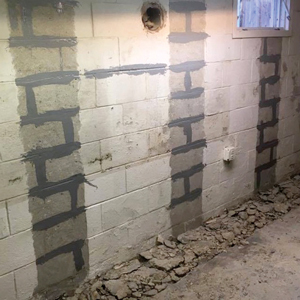
- Horizontal Cracking: A continuous horizontal crack running through the mortar joints, typically located three to five rows of blocks down from the top of the wall. This is the classic signature of lateral soil pressure.
- Stair-Step Shifting: Cracks that propagate in a zig-zag, stair-step pattern through block columns, particularly near the corners of the basement.
- Inward Tipping or Deflection: The top of the foundation wall is physically leaning inward, creating a visible gap between the masonry and the home’s wooden sill plate.
- Secondary Main-Floor Symptoms: First-floor doors directly above the bowing section that suddenly stick, windows that refuse to open smoothly, or sloped flooring.
High-Margin Engineering Solutions: Restoring Structural Integrity
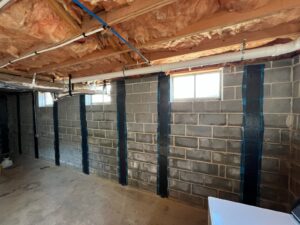 The good news is that a bowing wall does not automatically mean your home needs a massively disruptive, expensive total foundation replacement. Depending on how many inches the wall has deflected inward, modern structural repair techniques can permanently lock the masonry in place from the inside out.
1. Carbon Fiber Reinforcement Strips
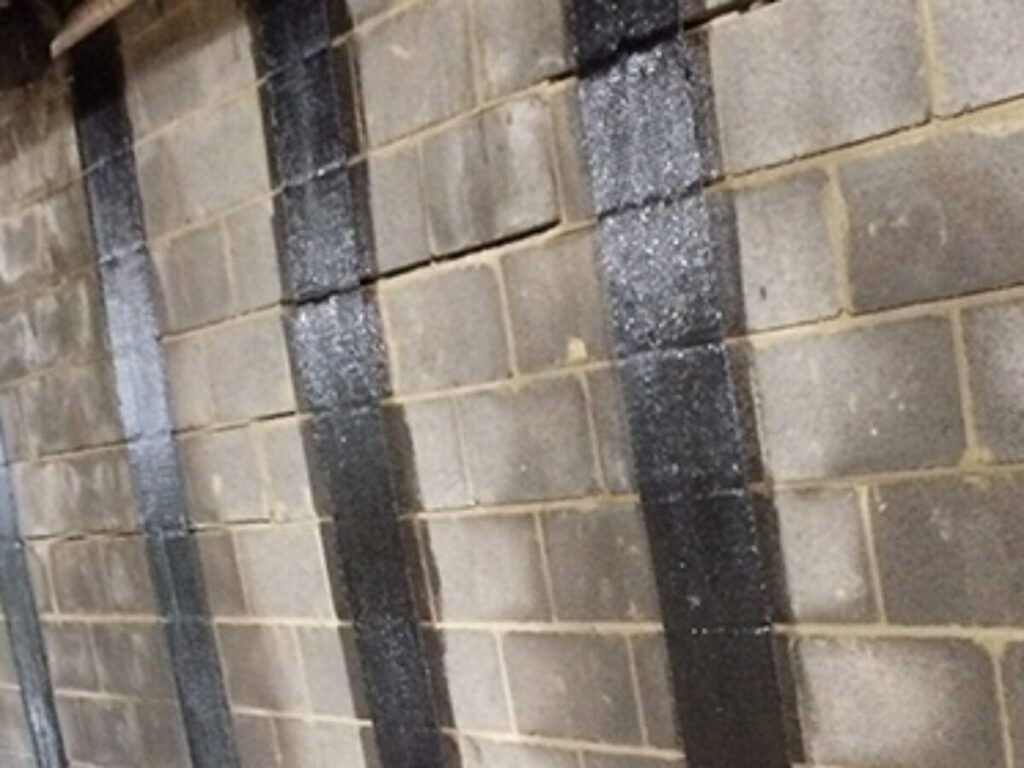
If a bowing wall is caught early—typically showing less than two inches of inward deflection—high-tensile carbon fiber straps are the premier engineering solution. These low-profile strips are bonded directly to the interior masonry wall using structural epoxy and anchored securely to both the heavy concrete footer and the upper floor joists. Carbon fiber is virtually unstretchable and possesses a tensile strength ten times greater than steel, permanently neutralizing lateral earth loads without taking up an inch of usable basement square footage.
2. Structural Steel I-Beam Stabilization
When a wall has bowed severely, suffered structural shearing, or shifted past the threshold where carbon fiber can safely manage the load, heavy-duty structural steel I-beams are required. These specialized steel beams are custom-fit to the vertical height of your basement wall. The bottom of the beam is anchored deep into the interior concrete slab floor, while the top is secured to the floor joist system with adjustable heavy-duty steel brackets. This creates a rigid structural skeleton that absorbs the massive external soil pressures, preventing any future inward movement.
Frequently Asked Questions
Can a bowing foundation wall be fixed without completely digging up my yard?
Yes. Advanced interior stabilization systems like carbon fiber straps and structural steel I-beams completely eliminate the need for costly, destructive exterior yard excavation. These systems neutralize lateral soil forces directly from inside the basement, protecting your landscaping, porches, and utilities from being torn up.
Will a horizontal crack in a block wall get worse if I just patch it with mortar?
Absolutely. Cosmetic mortar patches or hydraulic cements possess zero structural strength. Because a horizontal crack is caused by active, ongoing physical pressure from expanding clay outside, a superficial patch will simply pop out, crack, or flake off during the very next rain cycle while the structural bowing continues to worsen behind it.
How do I know if I need carbon fiber straps or steel I-beams for my foundation?
The choice between carbon fiber and steel beams depends entirely on the precise amount of inward deflection and the structural condition of the masonry joints. A qualified, non-commissioned structural inspector must measure the wall’s deflection down to the millimeter to determine which system is legally and mechanically required to keep your home safe.
Protect Your Structural Equity Today
Foundation movement is a progressive mechanical failure. It will never correct itself, and waiting to address a bowing wall only allows the external forces to cause more expensive damage to your home’s support frame.
Get a definitive, mathematically sound assessment of your basement walls from a veteran-led team that values transparency above all else. Contact Armored Basement Waterproofing today at (443) 949-3180 or fill out our online request form to schedule your honest, pressure-free foundation inspection.