Discovering a fresh crack along your basement wall is a universally stressful moment for any homeowner. The immediate fear is almost always the same: Is my house structurally safe, and how much is this going to cost to fix? In the Rockville area, foundation anomalies are incredibly common, but the severity of the issue depends heavily on how your home was originally built.
Rockville’s neighborhoods feature a diverse mix of housing stock. Older homes built mid-century frequently utilize concrete cinder block masonry, while newer residential developments rely on solid poured concrete walls. To understand what a crack is trying to tell you, you first need to identify your foundation material and learn how to analyze the direction of the fracture line.
Soil Mechanics in Montgomery County: The Root Cause
Foundations do not move without a reason. The primary driver behind local foundation issues is the geological composition of Montgomery County. The region features dense, clay-rich soils that are highly reactive to weather shifts. During wet seasons, this clay expands dramatically, drinking in groundwater and pushing forcefully against below-grade walls—a phenomenon known as lateral soil pressure.
When dry summer spells hit, the same soil shrinks and pulls away from the home, leaving gaps. This continuous cycle of swelling and contracting places immense mechanical stress on your home’s footprint. How that stress shows up depends entirely on whether your walls are poured or block.
Diagnosing Poured Concrete Foundations: Tracking the Line
Poured concrete walls are uniform, continuous structures. Because they lack joints, cracks behave in predictable patterns that help determine whether the issue is cosmetic or structural.
- Vertical Cracks: Drying and Settling. If you spot thin lines running straight up and down, these are usually shrinkage cracks that occurred during the concrete’s original curing process. While they can act as pathways for water tracking or radon gas, they rarely present an immediate structural failure risk.
- Diagonal Cracks: Differential Settling Indicators. When a crack runs at a sharp 45-degree angle or forms a staircase pattern across a smooth wall, it typically signals differential settling. This means one section of your home’s footing is sinking faster than the ground next to it, fracturing the concrete under intense tension.
Diagnosing Concrete Block Foundations: The Lateral Stress Danger
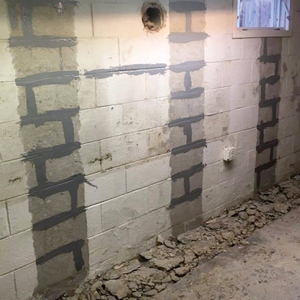
Concrete block walls are held together by mortar joints, which are inherently weaker than the hollow concrete blocks themselves. As a result, stress lines follow the path of least resistance through these horizontal and vertical seams.
- Stair-Step Cracking Along Mortar Joints. When lateral or downward pressure shifts a block wall, the mortar lines split in a jagged, stair-step pattern. If the crack remains narrow, it may point to localized settlement. However, if the blocks are separating from the mortar, the wall’s structural load capacity is dropping.
- Horizontal Mid-Wall Cracks and Inward Bowing: This is your critical red flag. When heavy, waterlogged clay soil pushes against the outside of a block wall, it forces the center of the wall inward. A long horizontal crack running through the middle section of your basement wall indicates that your foundation is actively failing under weight and bowing inward. This requires immediate, professional structural intervention.
Why Superficial Inside Patches and Waterproof Paints Fail
When a homeowner notices water leaking through a crack, the instinct is to grab a tube of epoxy or coat the area with heavy waterproof paint. While this might stop moisture for a few weeks, it does nothing to address the structural forces at play. Hydraulic cement and topical coatings simply trap water inside the masonry matrix. Over time, that trapped moisture degrades the steel rebar reinforcements, accelerates mortar rot, and breeds hidden mold growth behind your finished walls. True foundation crack repair requires addressing the external pressure or stabilizing the wall permanently from the inside.
Frequently Asked Questions
How can I tell if a basement wall crack is structural or cosmetic?
As a baseline rule, vertical hairline cracks under a sixteenth of an inch wide are typically cosmetic or related to normal settling. Cracks that are horizontal, wider than a quarter-inch, showing physical wall displacement, or accompanied by bowing walls are serious structural concerns that require an audit.
Does traditional homeowners’ insurance cover Rockville foundation repair?
Standard homeowners’ insurance policies rarely cover foundation repairs caused by hydrostatic pressure, natural soil movement, or typical settling. Coverage is generally restricted to sudden, accidental issues like a ruptured internal water line or a catastrophic flash flood event.
Can a severely bowing concrete block wall be permanently saved?
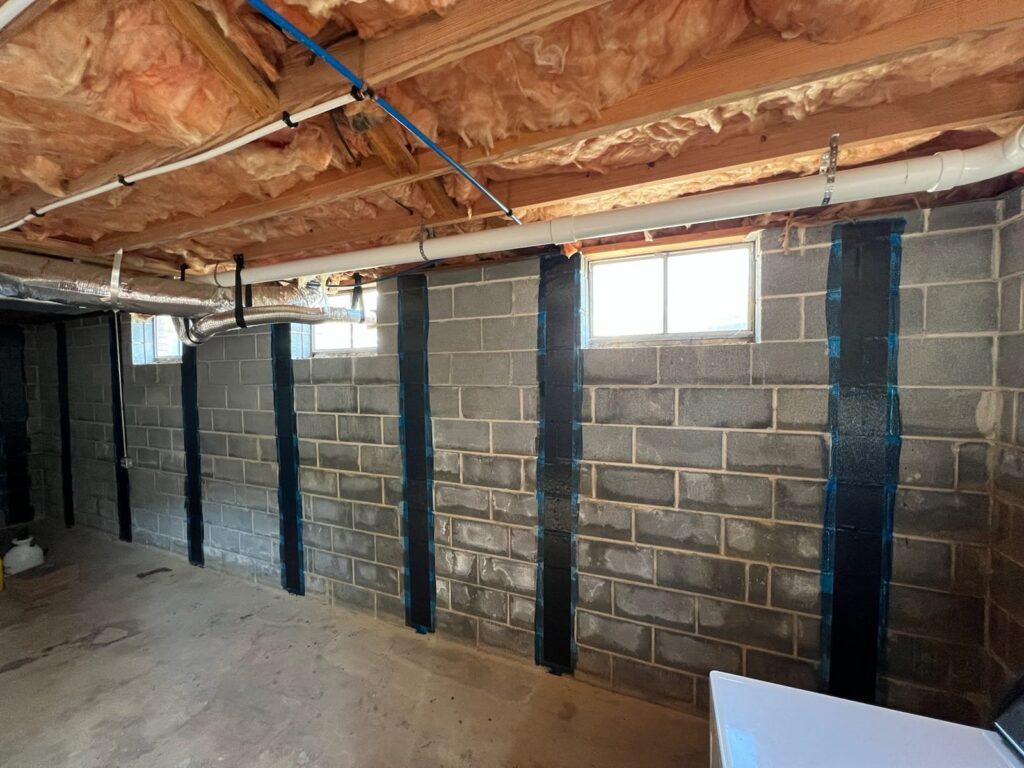
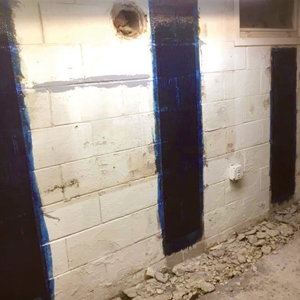
Yes. Even walls with significant inward bowing can be completely stabilized and secured using advanced solutions like carbon fiber structural straps, heavy-duty steel I-beams, or engineered wall anchors anchored into the yard’s stable soil zones. When installed correctly, these systems halt further movement permanently.
The Armored Integrity Standard
If you see cracking or movement in your Rockville basement, don’t let national franchise conglomerates scare you into buying an over-scoped, overpriced system. At Armored Basement Waterproofing, we operate completely free of commission-driven salespeople. Our seasoned structural evaluators provide honest diagnoses backed by military precision and family-owned accountability. Contact our team today to schedule your zero-pressure foundation inspection.