The Structural Red Alert: Understanding Inward Wall Deflection
Few property issues spark as much immediate anxiety for a homeowner as looking down a foundation wall and noticing a distinct inward bulge. Foundation walls are engineered to remain perfectly plumb, straight, and stable. When a concrete block or poured concrete wall begins to lean, curve, or buckle inward, it is a clear structural red alert indicating that the load-bearing integrity of your home is actively compromised. This condition, known as inward deflection, is not a minor cosmetic flaw that can be covered up with a fresh coat of waterproof paint; it is a serious mechanical failure that requires immediate, permanent structural remediation.
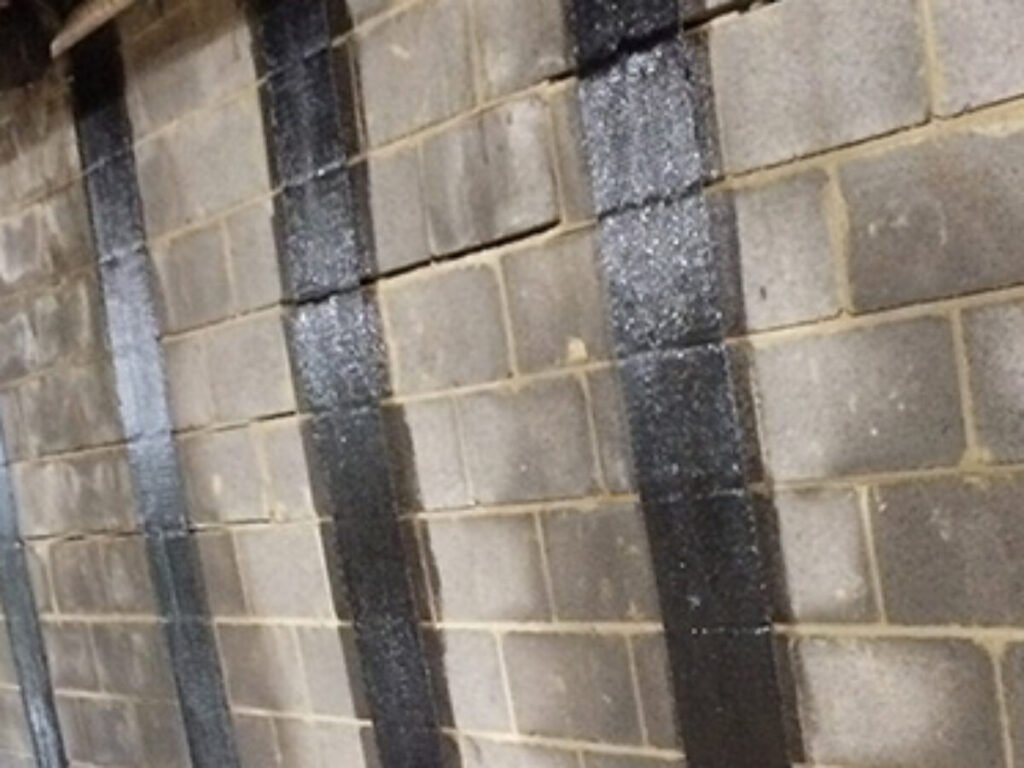
Left unaddressed, a bowing basement wall will steadily degrade over time. As the structural elements separate, the wall’s overall load capacity drops exponentially. This structural shift eventually threatens a complete wall collapse, which can destabilize the entire wood framing of your home above. Fortunately, identifying the early warning signs—such as prominent horizontal foundation cracks in the basement—allows you to implement long-term structural reinforcement using engineered steel infrastructure before catastrophic structural failure occurs.
The Invisible Force: Lateral Earth Pressure Explained
To understand how to permanently fix a bowing basement wall, you must first understand the environmental forces causing the movement. Your subterranean walls are locked in a continuous physical battle with the earth surrounding your home, dealing with a geological phenomenon known as lateral earth pressure.
Throughout Maryland, Virginia, and the Washington D.C. metro area, residential properties are built over dense, highly expansive clay soils. When heavy seasonal downpours or winter snowmelts saturate the ground, this clay acts like a massive sponge, absorbing water and swelling significantly. This soil expansion exerts immense inward hydrostatic and lateral forces against your buried foundation infrastructure. While concrete masonry block walls are incredibly strong under vertical compression (supporting the downward weight of your house), they possess very low tensile strength when subjected to horizontal loads. Over time, the continuous cycles of wet and dry weather snap the mortar bonds between the blocks, causing horizontal fractures across the center of the wall and pushing the individual masonry block ranks inward.
Why Structural Steel I-Beams Are the Ultimate Deflection Fix
When a foundation wall has sustained significant lateral force damage, it requires a robust mechanical countermeasure to arrest the movement. Heavy-duty structural steel I-beams provide an unmatched level of continuous support. Rather than attempting a superficial surface repair, an engineered I-beam system targets the primary load paths of the home to deliver permanent, rigid foundation wall stabilization.
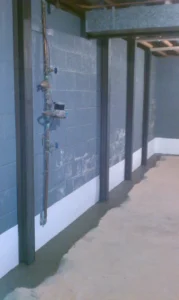
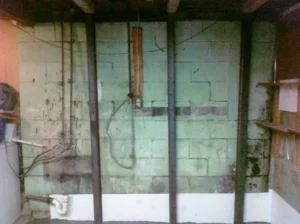
The installation process is highly systematic. High-strength steel columns are custom-cut to match the exact floor-to-ceiling height of your basement. The base of each beam is notched and deeply anchored directly into the solid concrete floor slab framing. Simultaneously, the top of each beam is secured to the overhead floor joists using heavy-duty, adjustable structural steel tension brackets. Once locked into place, these vertical steel columns intercept the incoming lateral forces and redistribute the weight smoothly across the home’s existing framework. This offers an immediate, permanent solution for lateral earth pressure repair, ensuring that the compromised wall cannot move another fraction of an inch, even during severe mid-Atlantic storm cycles.
Carbon Fiber vs. Steel I-Beams: When is Steel Mandatory?
Homeowners exploring foundation repair options often compare modern carbon fiber strapping against traditional steel columns. Carbon fiber is an exceptional, low-profile material that bonds directly to the clean masonry face using high-tensile structural epoxies. Because it sits completely flush against the wall, it can easily be painted or drywalled over without sacrificing any interior living space. However, carbon fiber is designed strictly to resist further stretching; it cannot provide mechanical stabilization if the wall’s structural framework has already moved too far out of plumb.
As a general rule of thumb, if a basement wall is bowing inward by less than two inches, carbon fiber straps are an excellent, highly cost-effective option. However, if the inward deflection exceeds two inches, if the top course of block has completely sheared away from the rim joist, or if the bottom footer is actively sliding inward, the sheer mechanical muscle of structural steel I-beams becomes mandatory. When budgeting for these heavy structural interventions, reviewing the comprehensive steel I-beam foundation repair cost must be viewed as a long-term investment in home preservation. A reputable, experienced structural foundation contractor in Maryland can accurately measure your wall’s precise deflection and recommend the exact engineering system your home requires.
Frequently Asked Questions
Q: Can structural steel I-beams straighten a bowing basement wall?
A: Structural steel I-beams are primarily designed to stop further movement and permanently stabilize a bowing basement wall. In most cases, the goal is to lock the wall in place and prevent additional structural damage. While some wall correction may be possible using hydraulic jacking systems, significant straightening typically requires exterior excavation to relieve soil pressure before adjustments can be made. Because this process increases labor, equipment requirements, and project costs, most homeowners choose stabilization as the safest and most cost-effective long-term solution.
Q: How many steel I-beams are needed to repair a bowing basement wall?
A: The number of steel I-beams required depends on several factors, including the wall’s length, the degree of inward deflection, and the overall structural condition of the foundation. During a professional inspection, measurements are taken to determine the appropriate beam spacing. In most foundation repair projects, steel I-beams are installed approximately every 4 to 5 feet to create a uniform reinforcement system capable of resisting ongoing lateral earth pressure.
Q: Can I finish my basement after steel I-beams are installed?
A: Yes. Installing structural steel I-beams does not prevent future basement finishing projects. Although the beams extend slightly from the wall surface, they can easily be incorporated into a standard framed wall system. Once covered with insulation and drywall, the reinforcement system remains hidden while continuing to provide permanent structural support. This allows homeowners to safely transform their basement into a comfortable and fully finished living space without compromising foundation stability.
Secure Your Home’s Structural Integrity with Zero Sales Pressure
Addressing structural wall deflection requires elite engineering precision, meticulous field execution, and absolute transparency. At Armored Basement Waterproofing, we operate under a strict, non-negotiable ZERO Salesman Policy. We do not employ commissioned sales representatives who use high-pressure scare tactics or exaggerated panic maneuvers to upsell unnecessary work. Instead, our veteran-led, family-operated company sends out highly trained, non-commissioned structural inspectors who provide transparent diagnoses and realistic options. Backed by over 100 years of combined team experience and an ironclad, fully transferable Life-of-Structure warranty, we ensure your home remains safe and stable for decades to come. Contact us today to secure your property’s value.