For many homeowners in Maryland and Northern Virginia, the crawlspace is the ultimate “out of sight, out of mind” area. It is dark, cramped, and rarely visited. However, neglecting this space is one of the most common—and expensive—mistakes a property owner can make. If you have noticed a persistent musty smell in your living room, cold floors in the winter, or unexplained spikes in your monthly utility bills, your crawlspace may be to blame.
At Armored Basement Waterproofing, we view the crawlspace not just as a structural necessity, but as a critical component of your home’s overall health. Professional crawlspace encapsulation is the permanent solution to moisture intrusion, transforming a damp, decaying environment into a clean, conditioned space that protects your home’s value.
The “Stack Effect”: Why Your Crawlspace Affects Your Upstairs Air
The primary reason a crawlspace issue manifests as an indoor air quality problem is a phenomenon known as the “Stack Effect.” Your home is not a sealed box; it breathes. As warm air rises and escapes through your attic or upper-floor vents, it creates a vacuum effect at the bottom of the structure. This vacuum pulls air from your crawlspace up into your living areas.
If your crawlspace is damp, that air is laden with moisture, mold spores, and even dust mites. Essentially, every breath you take in your home is partially sourced from the air beneath your floorboards. When that air is contaminated by a damp crawlspace, it doesn’t just smell unpleasant—it can lead to respiratory concerns and aggravate allergies. Encapsulation breaks this cycle, ensuring the air inside your home remains fresh and clean.
The Armored Approach: What Real Encapsulation Involves
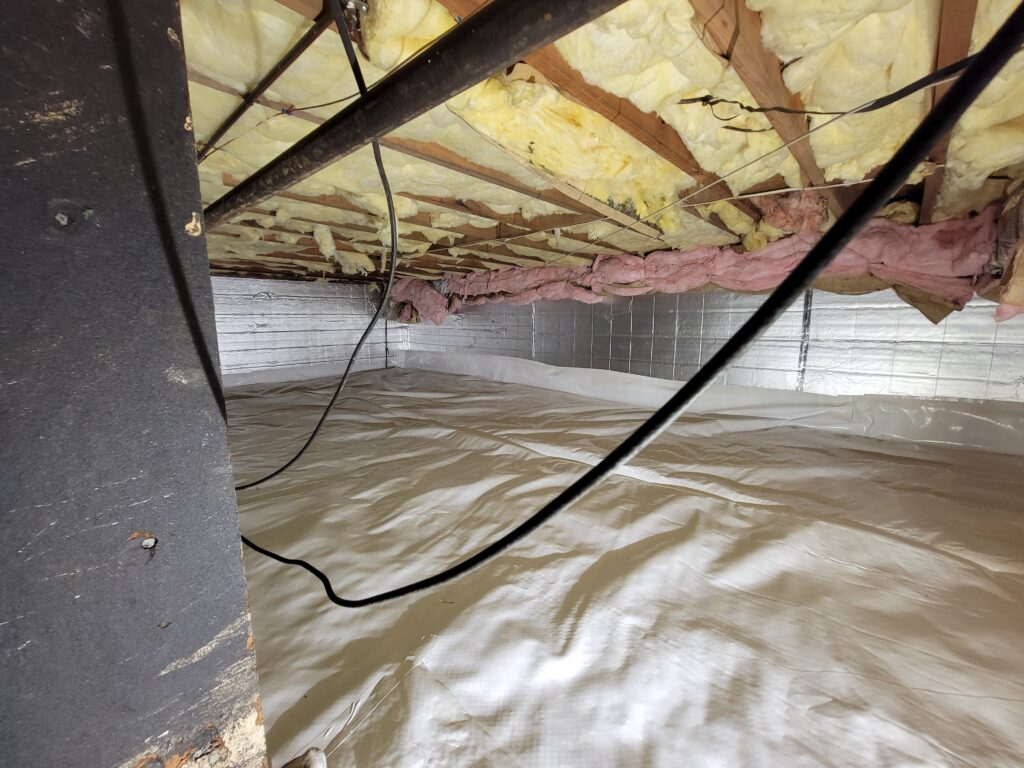
Many homeowners are tempted to solve dampness with a simple plastic sheet on the ground. However, “putting plastic down” is not encapsulation. In fact, if not done correctly, simple sheeting can trap moisture against your floor joists and sub-flooring, accelerating wood rot. True encapsulation is an engineering process, not a weekend DIY project.
The “Armored” approach involves a multi-layered defense strategy:
- Comprehensive Sealing: We seal all vents, foundation cracks, and potential entry points to prevent outside humidity and pests from entering the space.
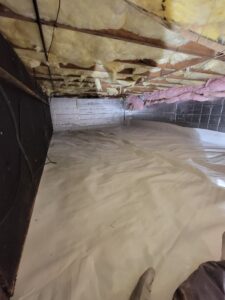
- Professional-Grade Vapor Barrier: We install a thick, antimicrobial vapor barrier that covers the floor and extends up the foundation walls. This creates a monolithic, sealed envelope that isolates your home from the earth’s moisture.
- Structural Drainage: Just like in a basement, we address the source of standing water by installing interior drainage systems if necessary, ensuring water is channeled away from the foundation.
- Commercial Dehumidification: The final, critical step is installing a high-capacity, commercial-grade dehumidifier. This unit maintains a controlled humidity level, effectively “conditioning” the crawlspace environment just like your main living area.
Return on Investment: Energy Efficiency and Home Value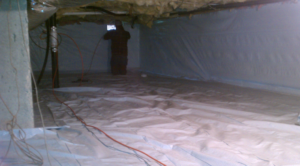
While the health benefits are significant, the financial argument for encapsulation is equally compelling. An unsealed, damp crawlspace forces your HVAC system to work significantly harder. In the summer, your air conditioner must fight the humidity rising from beneath your floor. In the winter, you are essentially paying to heat the cold, damp air entering your crawlspace.
By sealing the crawlspace and controlling the humidity, you stabilize the temperature beneath your floors. This not only lowers your utility bills but also preserves the structural integrity of your home’s timber, preventing sagging floors and mold growth on your joists. Encapsulation is an upgrade that pays for itself over time.
FAQ: Understanding Crawlspace Encapsulation
Can I just put plastic on the ground to stop mold?
Simple plastic sheeting often does more harm than good. Without sealing the walls and piers or addressing the humidity with a proper dehumidifier, the moisture remains trapped in the space, creating the perfect greenhouse for mold to grow on your wooden floor joists.
Will encapsulation help with pest control?
Yes. Pests like termites, carpenter ants, and rodents are attracted to damp, dark environments. By sealing entry points and removing the moisture source, you make your home significantly less attractive to these destructive pests.
Does my HVAC system work harder if my crawlspace is unsealed?
Absolutely. An unsealed, damp crawlspace creates an environment that requires your HVAC system to work overtime to condition humid, contaminated air, leading to higher monthly utility bills and faster wear and tear on your equipment.
Your crawlspace is the foundation of your home’s indoor air quality and structural efficiency. Ignoring moisture issues here is a gamble that rarely pays off. By investing in professional crawlspace encapsulation, you are choosing to stop the decay, improve your family’s health, and lower your energy costs for the long term. If you are ready to stop worrying about what is happening beneath your feet, our team of non-commissioned experts is ready to evaluate your crawlspace and provide a permanent, engineered solution.