When you discover water pooling in your basement or notice the tell-tale signs of efflorescence—that white, powdery substance—on your foundation walls, your immediate reaction is often to look for the quickest fix. However, in the world of home structural integrity, quick fixes often mask deeper, more expensive problems. If you have been researching how to keep your home dry, you have likely come across various methods. Among them, interior drainage systems consistently stand out as the gold standard for long-term, effective water management.
The Core Problem: Hydrostatic Pressure and Your Foundation
To understand why interior drainage is superior, you must first understand the enemy: hydrostatic pressure. Many homeowners believe that water enters their basement simply because it is raining hard. While rain is the catalyst, hydrostatic pressure is the mechanic. When the soil surrounding your home becomes saturated, it exerts immense pressure against your foundation walls and floor. Because water always seeks the path of least resistance, it forces its way through tiny hairline cracks, floor joints, and even through the porous concrete itself.
If you only attempt to treat the symptoms—such as patching a specific crack or painting walls with waterproof sealant—you are not addressing this pressure. Eventually, the water will simply find another point of entry. To truly waterproof a basement, you must manage the water before it can accumulate and exert pressure on your home’s structure. Our engineering-focused approach treats the environment rather than just the cosmetic damage, ensuring that water pressure is relieved before it compromises your home.
Why Surface Sealing Fails
Many hardware stores sell waterproof paints and epoxy injections. While these products might provide a temporary cosmetic fix, they fail as comprehensive waterproofing systems because they trap moisture inside the foundation wall. Over time, this trapped moisture can cause spalling, concrete degradation, and further structural weakening. A true waterproofing system does not just stop water from coming in; it provides a managed path for water to exit. By ignoring the hydrostatic pressure, sealants essentially invite the water to push harder against your foundation, which can lead to more significant structural issues down the line.
How Interior Drainage Systems Work: The Engineering Approach
An interior drainage system is not just a pipe; it is a meticulously engineered sub-floor pressure relief system. The process involves installing a high-capacity drainage channel beneath the basement floor, precisely at the footer-wall joint—the most common area for water seepage. By installing this system on the interior, we avoid the massive cost and disruption associated with excavating the entire exterior perimeter of your home.
The installation follows a strategic, logical flow:
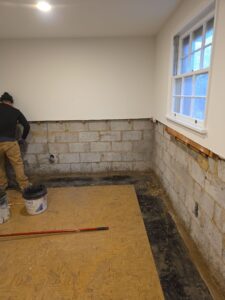
- Perimeter Trenching: A narrow section of the concrete floor is removed along the perimeter of the basement walls.
- Drainage Installation: A specialized, high-flow perforated drainage pipe is laid within a bed of washed gravel to allow for efficient water collection. This gravel bed acts as a filter, preventing debris from clogging the system.
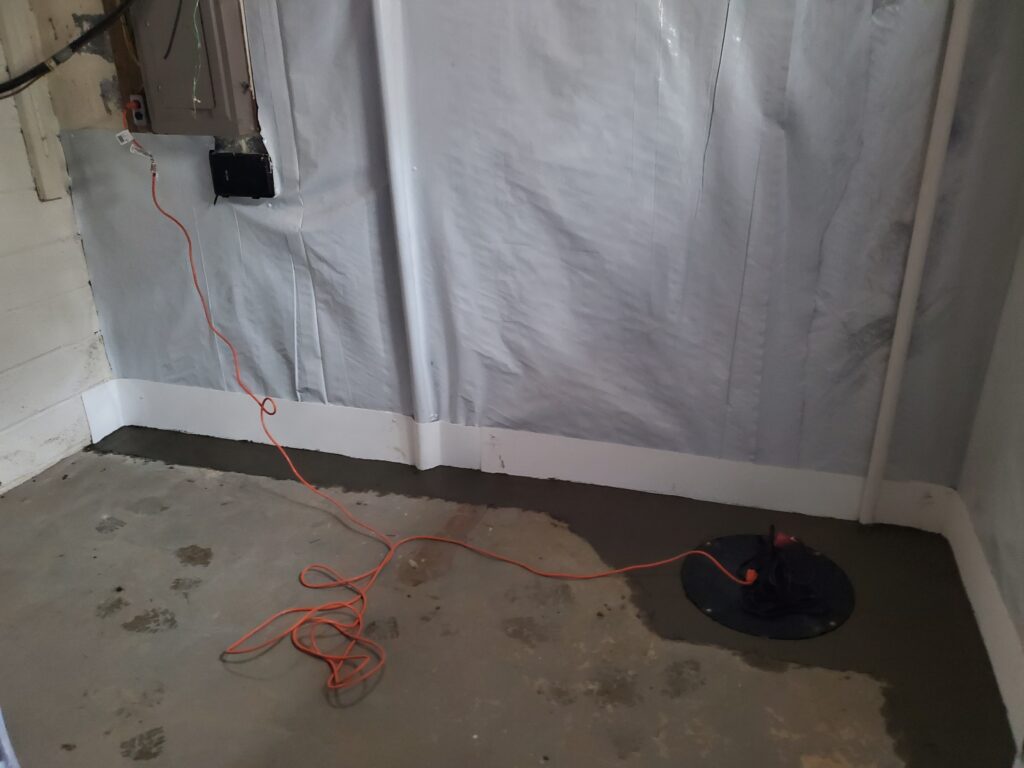
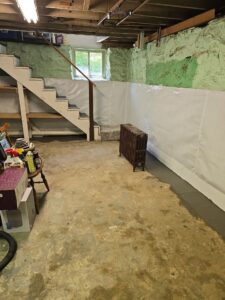
- Pressure Relief: Wall flanges or vapor barriers are often installed to direct any moisture trickling down the foundation walls directly into the drainage channel, ensuring it never touches the floor.
- Re-concreting: The trench is filled with gravel and sealed with a new layer of concrete, leaving your basement looking clean and professional.
This system effectively lowers the water table beneath your floor, neutralizing hydrostatic pressure and ensuring that water is intercepted before it ever has a chance to flood your basement. It turns your basement from a liability into a dry, usable space.
The Heart of the System: The Sump Pump
Your drainage system is only as effective as its exit strategy. This is where the sump pump comes into play. The water collected by your interior drainage pipes is channeled into a sump pit located at the lowest point of the system. A high-efficiency, commercial-grade sump pump then automatically activates to eject that water away from your home’s foundation.
We emphasize that the pump is the heart of the system. This is why we recommend backup power solutions, such as battery backups or secondary pumps, to ensure that your basement remains dry even during severe storms when the power might go out. A reliable pump provides the necessary peace of mind that your home remains protected 24/7.
FAQ: Understanding Your Waterproofing System
Does a basement waterproofing system require digging up my entire basement floor?
No. A professional interior drainage system is designed to be efficient and minimally invasive. We only remove a narrow strip of concrete along the perimeter of your basement where the water pressure is highest, preserving the rest of your flooring and foundation.
Is interior waterproofing better than exterior waterproofing?
For the vast majority of existing homes, interior systems are the preferred choice. They are significantly more cost-effective, require no major excavation of your yard or landscaping, and provide a permanent solution for managing seepage at the footer-wall joint.
How long does an interior drainage system last?
Because these systems are installed below grade and protected from the elements, they are built to last the lifetime of the home. With periodic sump pump maintenance and inspection, your interior drainage system will continue to provide peace of mind for decades.
Waterproofing your basement is not an expense; it is a critical investment in your home’s equity, structural health, and your family’s indoor air quality. By choosing an interior drainage system, you are opting for an engineered, permanent solution that addresses the root cause of flooding rather than simply masking the symptoms. If you are ready to stop managing leaks and start enjoying a dry, usable basement, our team of non-commissioned experts is ready to help you design a system that works for your home’s unique needs.