For many Baltimore homeowners, a heavy rainstorm brings more than just a green lawn—it brings a sense of deep-seated anxiety. If you find yourself checking the basement floor every time the clouds darken over the Inner Harbor, you aren’t just being paranoid. You are likely reacting to a powerful invisible force known as hydrostatic pressure.
In the Mid-Atlantic region, our soil is famously heavy with clay. This clay acts like a sponge, holding onto vast amounts of water. When the ground becomes saturated, that water has nowhere to go but against your foundation walls. Understanding the warning signs of this pressure is the first step toward protecting your home’s structural integrity and your family’s health.
What is Hydrostatic Pressure and Why is it Attacking Your Maryland Home?
Hydrostatic pressure is the force exerted by stagnant water. Think of it like the pressure you feel in your ears when you dive to the bottom of a swimming pool. Because Baltimore sits in a high-precipitation corridor with dense, poorly draining soil, water accumulates quickly around foundation footings. As the water volume increases, it exerts thousands of pounds of pressure against your basement walls and floor.
This force is relentless. It doesn’t just look for existing holes; it creates its own. It pushes through microscopic pores in concrete and forces its way through the “cove joint”—the critical seam where your basement floor meets the wall.
5 Signs You Have a Water Pressure Problem
Recognizing the symptoms of hydrostatic pressure early can save you tens of thousands of dollars in structural repairs. Here are the five most common red flags we see in Maryland basements.
1. Hairline or Horizontal Foundation Cracks
While some vertical cracking is common due to a house settling, horizontal cracks are a major cause for alarm. These usually appear mid-way up the wall and indicate that the exterior pressure is literally pushing the wall inward. Even small hairline cracks can become gateways for seepage during the next Maryland “noreaster.”
2. Efflorescence: That Mysterious White Powder
Have you noticed a white, chalky substance on your brick or concrete walls? That is efflorescence. As hydrostatic pressure forces water through the masonry, the water evaporates, leaving behind mineral salts. While the powder itself isn’t dangerous, it is a definitive “fingerprint” of active water migration through your walls.
3. Standing Water at the Floor-to-Wall Joint
The “cove joint” is the weakest point of any basement. If you see water pooling specifically where the wall meets the floor, the pressure beneath your home has reached its breaking point. This isn’t just a leak; it is a sign that the water table under your house has risen and is looking for a relief point.
4. Bowing or Inward Leaning Basement Walls
If you place a level against your basement wall and notice a curve, the hydrostatic pressure has moved from a nuisance to a structural emergency. Bowing walls indicate that the soil outside is expanded and heavy, physically compromising the masonry. This requires immediate professional intervention before the wall loses its load-bearing capacity.
5. Damp Spots and Peeling Paint
If you’ve tried to “waterproof” your basement with a bucket of sealant paint only to see it bubble and peel months later, you’ve seen hydrostatic pressure in action. No topical paint can withstand the PSI of water pushing from the outside. Peeling paint and damp, dark patches are signs that moisture is trapped inside the wall itself.
Why “Sealant Paints” Are a Temporary Band-Aid
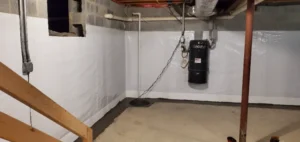
Many big-box stores sell “waterproofing paint,” but these products fail because they attempt to block the water at the exit point. You cannot stop the physics of water with a thin layer of latex or epoxy. To truly fix the problem, you must manage the pressure. This is why professional sub-floor drainage is the industry standard for permanent protection.
The Armored Solution: Sub-Floor Pressure Relief Systems
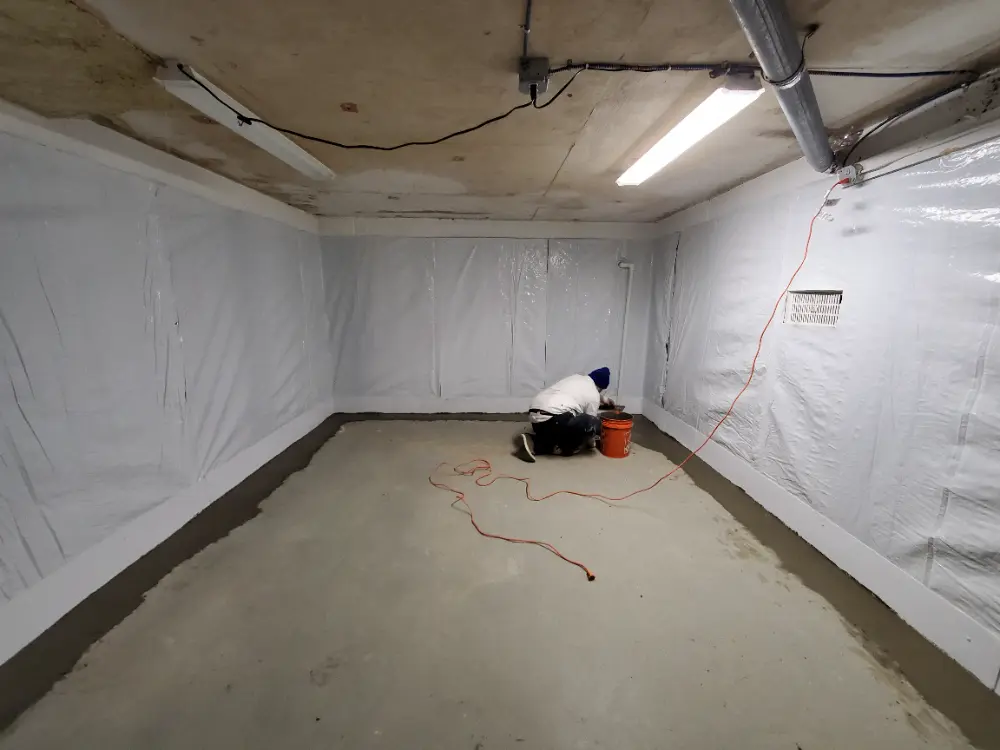
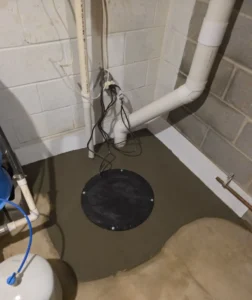
At Armored Basement Waterproofing, we don’t believe in “one-size-fits-all” packages. Our solution involves installing a sub-floor drainage channel that creates a path of least resistance. Instead of the water pushing through your walls, it flows into our specialized pressure-relief system and is directed safely to a high-capacity sump pump. This effectively “de-waters” the soil around your foundation, removing the pressure entirely.
FAQs About Foundation Pressure
Q: Can hydrostatic pressure collapse a basement wall?
A: Yes. If the pressure exceeds the structural strength of the masonry, walls can bow, shear, or eventually collapse. Early detection of horizontal cracks is key to preventing this.
Q: Does homeowner’s insurance cover hydrostatic pressure damage?
A: Generally, no. Most standard policies cover “sudden and accidental” water damage (like a burst pipe) but exclude gradual seepage or groundwater pressure issues, which are classified as maintenance.
Q: How do you stop hydrostatic pressure permanently?
A: You cannot stop the rain or the soil type, but you can manage the water. A sub-floor drainage system with a reliable sump pump is the most effective way to relieve the pressure and keep the basement dry for the life of the home.
Protect Your Baltimore Home Today
Don’t wait for the next Maryland downpour to find out your foundation is at risk. At Armored Basement Waterproofing, we provide honest, owner-led inspections without the high-pressure sales tactics. We identify the root cause of your moisture issues and provide a tailored plan to keep your home safe and dry.
Contact us today for a zero-pressure consultation.