Discovering a curve in your basement wall or noticing horizontal cracking along the concrete block line is alarming. In Montgomery County, expansive soil and heavy seasonal rains place immense pressure on residential foundations. Left unaddressed, inward wall movement threatens your home’s structural safety, resale value, and overall stability. Understanding your repair options—specifically carbon fiber straps versus heavy-duty steel I-beams—helps you choose the permanent fix your home needs.
Why Basement Walls Bow in Montgomery County & Central Maryland
Rockville and the surrounding Central Maryland region are known for dense, expansive clay soil. Clay retains high volumes of moisture after heavy rainstorms or rapid winter snowmelts. As clay absorbs water, it expands significantly, generating extreme lateral earth pressure against below-grade basement walls.
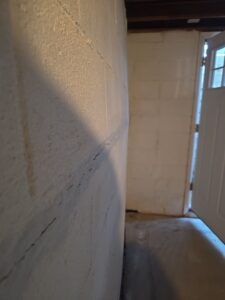
In concrete block (cinder block) foundations common across Rockville subdivisions, this relentless lateral force pushes against mortar joints. Over time, the middle section of the wall begins deflecting inward, producing telltale horizontal cracks along the third or fourth block course. In poured concrete foundations, vertical or diagonal shear cracks near corners often signal similar lateral pressure risks.
Carbon Fiber Straps vs. Steel I-Beams: Which Is Right for Your Home?
When stabilizing bowing basement walls, two primary interior repair methods provide permanent structural reinforcement without requiring full, destructive exterior excavation. Choosing between them depends entirely on the total amount of inward wall deflection.
1. Carbon Fiber Wall Straps (Best for Less Than 2 Inches of Bowing)
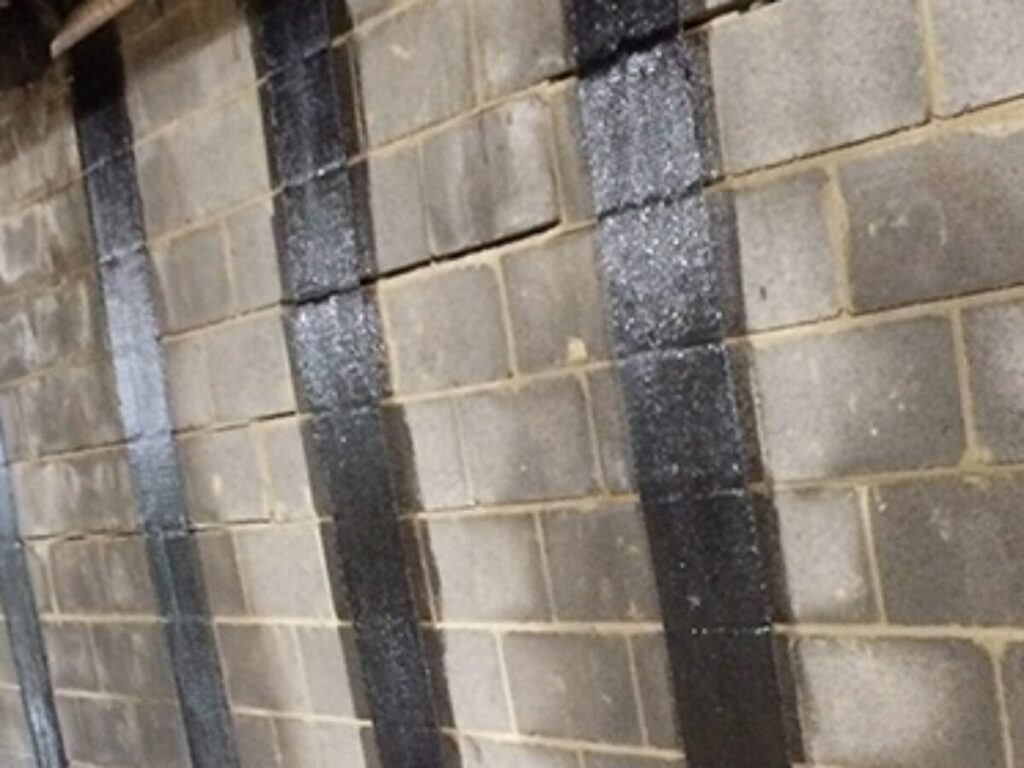
Carbon fiber is an advanced, high-tensile material engineered to be stronger than structural steel while remaining ultra-lightweight and flexible during application. Carbon fiber straps are bonded vertically to the interior surface of the basement wall using structural epoxy resins.
- Low-Profile Design: Carbon fiber straps lay virtually flat against the wall, allowing you to easily paint over them or build a finished wall frame directly on top without losing square footage.
- Tensile Load Resistance: Once cured, carbon fiber locks the wall in place, evenly distributing lateral soil loads so the foundation cannot move inward any further.
- Clean, Fast Installation: Carbon fiber installation involves zero heavy equipment, minimal dust, and can usually be completed in a single day.
2. Structural Steel I-Beams (Best for Severe Deflection & Structural Shearing)
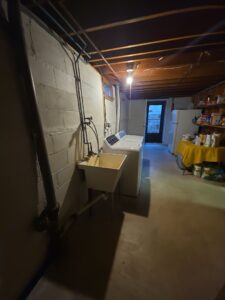
When lateral earth pressure forces a basement wall to bow inward beyond two inches—or when the wall begins shearing off its concrete footing—carbon fiber alone is no longer sufficient. In these cases, custom-engineered steel I-beams deliver heavy-duty structural reinforcement.
- Maximum Structural Strength: Steel I-beams are custom-cut to fit your basement height, anchored solidly to the concrete floor slab, and bolted directly to the heavy floor joists above.
- Prevents Wall Rotation: Steel beams brace the top and bottom of the wall, absorbing immense soil pressure and guaranteeing the structure remains rigid.
- Permanent Support: Heavy-gauge steel provides lifetime structural support for severely compromised foundations.
Structural Warning Levels: When Does Bowing Become an Emergency?
Understanding the severity of wall displacement helps determine how quickly professional remediation must occur:
| Deflection Level | Visual Symptoms | Recommended Solution |
|---|---|---|
| Hairline to 1 Inch | Horizontal mortar line cracks; minor dampness along seams | Carbon Fiber Wall Straps |
| 1 Inch to 2 Inches | Visible inward bowing in wall center; sticking main-floor doors | Carbon Fiber Straps or Steel I-Beams |
| Over 2 Inches | Severe bowing; wall shearing at top/bottom; wall seam separation | Custom Structural Steel I-Beams |
Why DIY Bracing or Mortar Patching Always Fails
Filling horizontal cracks with mortar, hydraulic cement, or off-the-shelf expansion foam only hides the visual symptom without addressing lateral soil pressure. As wet clay continues to expand during local rainstorms, unreinforced concrete blocks will continue pushing inward, eventually causing complete wall failure. Permanent structural stabilization requires true load-bearing solutions like carbon fiber or structural steel.
Frequently Asked Questions
Will carbon fiber straps prevent my basement wall from bowing further?
Yes. Carbon fiber straps possess extraordinary tensile strength. Once bonded to your foundation with structural epoxy, they completely lock the wall in place and prevent any future inward deflection.
Do I have to tear down my basement wall if it is bowing?
In the vast majority of cases, no. Unless a foundation wall has completely collapsed, professional reinforcement using carbon fiber straps or structural steel I-beams stabilizes the existing wall safely without expensive teardowns.
How much does carbon fiber foundation repair cost in Rockville, MD?
Cost depends on the length of the wall and total strap count required. However, carbon fiber installation typically costs 40% to 50% less than full exterior excavation or complete wall rebuilds.
Get an Honest Structural Evaluation Without the Hard Sell
Don’t let commission-based salespeople scare you into overpriced foundation repairs. At Armored Basement Waterproofing, our owner-led inspections provide honest diagnostic feedback with zero sales tactics. Contact us today to schedule your free, zero-pressure structural wall evaluation in Rockville and surrounding Montgomery County areas.