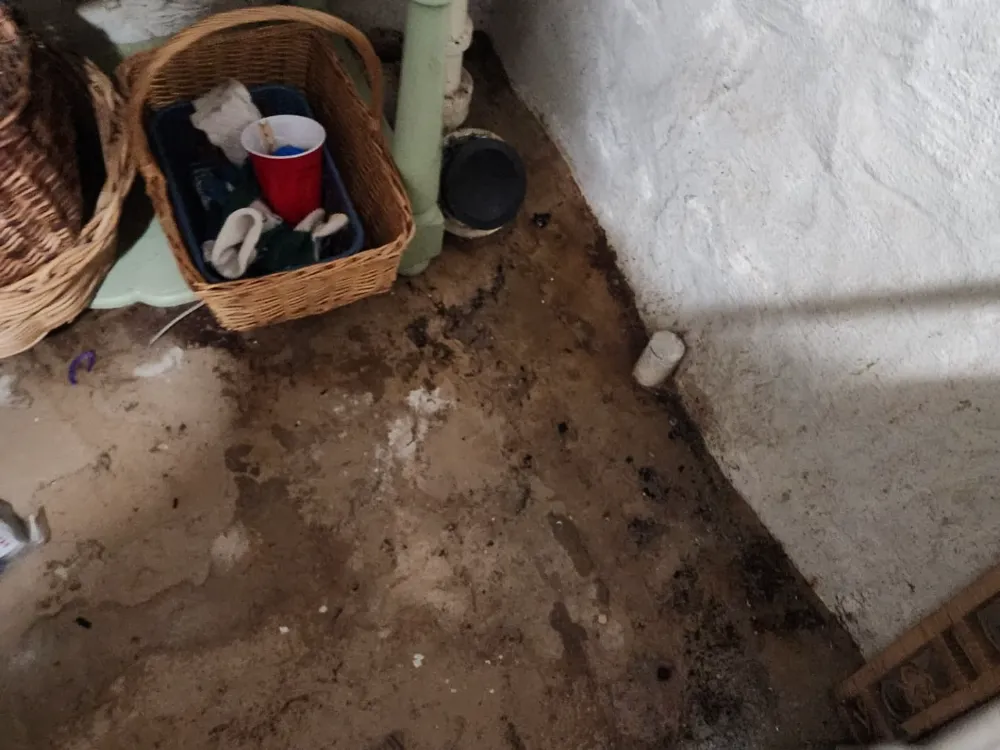
If you have ever walked down into your basement after a heavy Mid-Atlantic rainstorm only to find water pooling along the perimeter edge of your floor, you are not alone. Many homeowners assume that water in the basement stems from a leaking window well or an above-ground crack. However, one of the most common and persistent entry points for subsurface groundwater is the seam where your basement wall meets the concrete floor slab—a location known in the industry as the cove joint.
Understanding why water invades this specific gap is the first step toward securing a dry, healthy home. In Maryland, regional soil conditions and weather patterns combine to create relentless subsurface forces that make traditional cosmetic fixes completely ineffective.
The Science of Cove Joint Seepage: Hydrostatic Pressure
When your home was constructed, the concrete footings were poured first, followed by the foundation walls, and finally, the concrete basement floor slab. Because poured concrete does not bond seamlessly to cured concrete, an expansion gap remains between the edge of the floor slab and the wall. This seam is the cove joint.
During heavy rain events or spring snowmelts in Maryland, the ground surrounding your foundation becomes saturated. Maryland’s soil is dense with heavy clay, which absorbs and holds vast quantities of moisture. As this clay swells, saturated water builds up around and beneath your foundation footings, generating immense vertical and lateral force known as hydrostatic pressure.
Water always follows the path of least resistance. When hydrostatic pressure under the floor slab mounts, it forces standing groundwater up through the unsealed cove joint seam, resulting in water pooling along the edges of your basement floor—even when the walls themselves appear bone dry.
Why Surface Patches and Caulk Always Fail
When homeowners spot water coming up along the floor seam, their initial reaction is often to apply a quick DIY fix. Stores sell tubes of hydraulic cement, silicone caulk, and waterproof masonry coatings that promise a quick solution. Unfortunately, applying these products to the surface of a cove joint is a temporary band-aid on a structural problem.
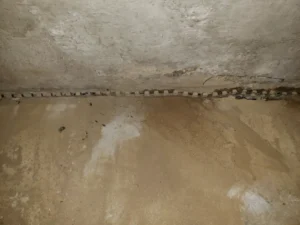
- Trapped Hydrostatic Force: Sealing the seam from the top does not stop the water pressure beneath your floor slab. The pressure will inevitably crack the hydraulic cement patch or bypass the caulk.
- Wall and Floor Damage: Trapping high-pressure water inside cinder block cores or beneath the slab edge accelerates structural deterioration and can cause horizontal wall bowing over time.
- Mold and Efflorescence: Moisture trapped under surface coatings creates a continuous breeding ground for mold spores and leaves behind a chalky white mineral residue known as efflorescence.
The Engineering Fix: Interior Sub-Floor Pressure Relief
To stop cove joint seepage permanently, you cannot simply attempt to hold back the water—you must relieve the pressure. A professional sub-floor pressure-relief channel system tackles the problem at its source by giving trapped groundwater an engineered path of escape before it ever reaches your living space.
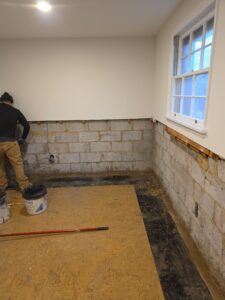
- Perimeter Trenching: The edge of the concrete floor slab along the foundation perimeter is carefully opened to expose the underlying footing.
- Aggregate & Sub-Drainage Channel: A perforated drainage channel surrounded by clean washed aggregate is installed directly alongside the footing, below the slab level.
- Wall Moisture Barrier: A heavy-duty wall liner is attached to the foundation wall, extending down into the sub-floor drainage system to direct any internal wall condensation below the floor.
- Sump System Integration: The sub-floor channel is pitched toward a high-capacity dual-pump sump system designed to pump collected water safely away from your home’s exterior foundation.
- Slab Restoration: Fresh concrete is poured flush over the channel, restoring a smooth, clean basement floor.
| Method | Mechanism | Long-Term Result |
|---|---|---|
| Hydraulic Cement / DIY Caulk | Surface Sealing | Fails under pressure; water redirects or breaks through |
| Sub-Floor Pressure Relief | Subsurface Drainage & Pumping | Permanently eliminates pressure; Lifetime Protection |
Protect Your Foundation with Zero High-Pressure Sales
Dealing with water at the seam of your basement floor can be stressful, but fixing it shouldn’t be complicated or driven by commission-hungry salespeople. At Armored Basement Waterproofing, your home is inspected directly by an experienced owner—never a salesman. We diagnose the true root cause of your seepage and design custom, sub-floor pressure-relief systems backed by a transferable, Life-of-Structure Warranty.
Stop mopping up basement water after every Maryland storm. Contact Armored Basement Waterproofing today to schedule your candid, zero-pressure evaluation.