Quick answer: For many Maryland homeowners, crawlspace encapsulation is worth considering when persistent humidity, condensation, standing water, musty odors, mold growth, pests, or damaged insulation are affecting the space.
A full encapsulation project in Maryland may cost approximately $5,500 to $16,000 or more, depending on crawlspace size, existing water problems, liner thickness, drainage requirements, insulation, and whether the system needs a sump pump or dehumidifier.
The return is not limited to monthly energy savings. Encapsulation can also help protect floor framing, reduce moisture-related repair risks, improve indoor comfort, and make the crawlspace less concerning during a future home inspection.
However, not every property needs the most extensive system. A professional inspection should determine whether the home requires a vapor barrier alone or a combination of drainage, air sealing, insulation, sump pump protection, and dehumidification.
Key Takeaways for Maryland Homeowners
- A basic plastic liner and full encapsulation are not the same solution.
- Groundwater and plumbing leaks should be corrected before the space is sealed.
- Crawlspace humidity should generally remain below levels that support condensation, mold growth, and wood decay.
- Energy savings vary according to the home’s HVAC system, insulation, air leakage, and existing moisture conditions.
- The strongest ROI often comes from preventing expensive structural and moisture-related damage.
- Maryland’s humid summers and seasonal rainfall make year-round moisture control especially important.
Why Maryland Crawlspaces Develop Moisture Problems
Maryland homes experience humid summers, heavy rain, temperature changes, and periods of saturated soil. These conditions can create ongoing moisture problems beneath homes with vented or dirt-floor crawlspaces.
During warm weather, humid outdoor air can enter through open foundation vents. When that air reaches cooler ducts, pipes, floor framing, or foundation surfaces, condensation may develop. Moisture can also enter through exposed soil, foundation cracks, poor exterior grading, plumbing leaks, or groundwater seepage.
Air naturally moves upward through a home because of pressure differences commonly associated with the stack effect. As a result, odors, humidity, and airborne particles from the crawlspace can influence the rooms above it.
Common warning signs include:
- Musty odors on the first floor
- Condensation on pipes, ducts, or floor joists
- Damp or fallen fiberglass insulation
- Visible mold or fungal growth
- Rust on metal components
- Standing water after rain
- Insect or rodent activity
- Soft, uneven, or squeaking floors
- High indoor humidity
- Increased HVAC runtime
Homeowners experiencing these conditions can learn more about professional crawlspace encapsulation and the components used to control ground moisture and humidity.
What Is Crawlspace Encapsulation?
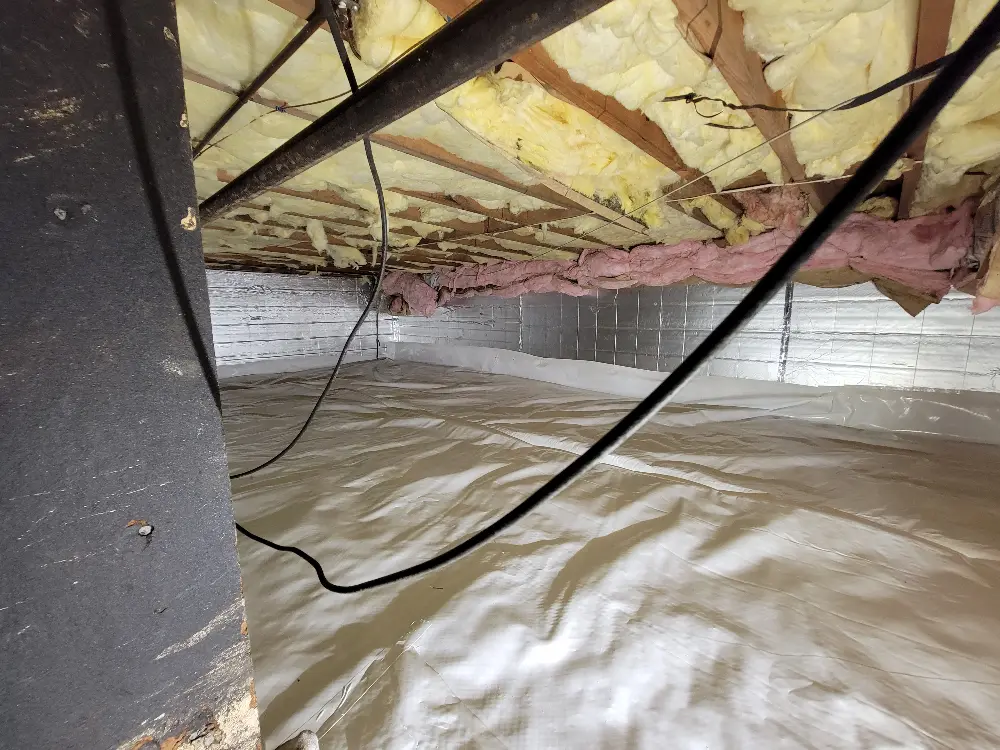
Crawlspace encapsulation is the process of separating the area beneath a home from exposed soil, humid exterior air, and uncontrolled moisture sources.
A complete system may include:
- Removal of debris and damaged insulation
- Correction of active leaks or standing water
- Installation of drainage when groundwater is present
- Sealing of foundation vents and exterior penetrations
- Installation of a reinforced vapor barrier across the floor
- Extension and sealing of the liner along foundation walls or piers
- Air sealing around rim joists and penetrations
- Crawlspace insulation improvements
- Installation of a crawlspace-rated dehumidifier
- Addition of a sump pump when water collection is necessary
The exact design should reflect the home’s moisture sources. Installing a liner without addressing groundwater, drainage, or exterior runoff can leave the underlying problem unresolved.
Crawlspace Encapsulation vs. a Basic Vapor Barrier
A basic vapor barrier usually consists of plastic sheeting laid over exposed soil. It may reduce some ground moisture, but seams, walls, vents, and penetrations often remain unsealed.
Full encapsulation creates a more continuous moisture-control system.
| Feature | Basic Vapor Barrier | Full Crawlspace Encapsulation |
|---|---|---|
| Covers exposed soil | Yes | Yes |
| Sealed seams | Not always | Yes |
| Attached to foundation walls | Usually no | Yes |
| Foundation vents sealed | No | Yes |
| Air leakage addressed | No | Yes |
| Drainage included | No | When needed |
| Sump pump included | No | When needed |
| Dehumidifier included | No | When needed |
| Long-term humidity control | Limited | More comprehensive |
Homeowners comparing these options can also review the guide to crawlspace encapsulation versus vapor barrier installation.
Average Crawlspace Encapsulation Cost in Maryland
The following estimates provide a general planning range for Maryland and Mid-Atlantic homes. They are not fixed quotes. Actual costs depend on site conditions, material specifications, access, and the amount of preparation required.
| Project Level | Typical Components | Estimated Cost |
|---|---|---|
| Basic vapor barrier | Loose-laid floor liner with limited sealing | $1,800–$3,500 |
| Standard encapsulation | Reinforced liner, sealed seams, wall attachment, vent sealing, and air sealing | $5,500–$9,500 |
| High-performance moisture-control system | Heavy-duty liner, drainage, sump pump, dehumidifier, insulation, and detailed air sealing | $9,500–$16,000+ |
A lower quote may cover only the crawlspace floor. Homeowners should verify whether the proposal includes wall coverage, piers, vent sealing, drainage, dehumidification, insulation, cleanup, and warranty protection.
What Affects the Final Cost?
Crawlspace size
Larger crawlspaces require more liner, seam tape, fasteners, insulation, and labor.
Clearance and accessibility
A low or obstructed crawlspace can take longer to prepare and encapsulate safely.
Existing water intrusion
Standing water may require a crawlspace drainage system, exterior drainage corrections, or grading improvements before encapsulation.
Mold or damaged materials
Contaminated insulation, organic growth, debris, and deteriorated wood may need to be addressed before the space is sealed.
Vapor barrier thickness
Reinforced liners generally provide greater durability than thin polyethylene sheeting, particularly in crawlspaces used for storage or future mechanical access.
Dehumidification
Some homes require a dedicated crawlspace dehumidification system to maintain stable humidity after vents and air leaks have been sealed.
Sump pump protection
If water collects beneath the home, the system may need a sump pump and a suitable discharge route.
Insulation and air sealing
The condition of the rim joists, foundation walls, ductwork, plumbing penetrations, and existing insulation can affect the project scope.
How Crawlspace Encapsulation Can Deliver ROI
1. Reduced risk of wood rot and structural repairs
Persistent moisture can create conditions that support fungal growth and decay in floor joists, beams, sill plates, and subflooring.
Encapsulation cannot repair wood that is already structurally damaged. However, when water sources are corrected and humidity is controlled, it can help reduce the conditions that cause continued deterioration.
Preventing or limiting damage to structural framing may provide more financial value than energy savings alone.
2. Improved HVAC efficiency and comfort
Humid air can make a home feel uncomfortable and place additional demand on heating and cooling equipment. Unsealed crawlspaces may also expose ductwork and floors to significant temperature changes.
Encapsulation, insulation, and air sealing may help stabilize conditions beneath the home. Actual utility savings will vary, so homeowners should not treat a specific percentage reduction as guaranteed.
For more information, see how encapsulation and energy-efficiency improvements may help lower utility costs.
3. Better moisture and odor control
A properly designed system limits evaporation from exposed soil and reduces humid exterior air entering through vents and gaps. This may help reduce musty odors and moisture migration into the living areas.
Homeowners concerned about odors, allergens, or humidity can also explore professional indoor air quality solutions.
4. Fewer pest-friendly conditions
Termites, insects, rodents, and other pests are often attracted to damp, sheltered environments. Encapsulation does not replace professional pest treatment, but reducing moisture and sealing accessible gaps can make the crawlspace less hospitable.
5. A cleaner space during resale inspections
A wet, moldy, or deteriorated crawlspace may create concerns during a home inspection. Buyers may request repairs, additional evaluations, or price concessions.
A clean, accessible, and professionally protected crawlspace can help demonstrate that moisture management has been taken seriously. Encapsulation does not guarantee a higher appraisal or sale price, but it may remove a significant objection for prospective buyers.
Is Crawlspace Encapsulation Worth It for Every Home?
Encapsulation is most likely to be worthwhile when the crawlspace has one or more of the following conditions:
- Exposed soil
- Recurring condensation
- High humidity
- Musty odors
- Damp or damaged insulation
- Mold or fungal growth
- Pest activity
- Rusted mechanical components
- Water intrusion after rain
- Cold floors or uneven indoor temperatures
- Signs of moisture-related wood damage
A complete system may not be necessary when the moisture source is limited to an isolated plumbing leak, a disconnected downspout, or another repairable condition.
For example, exterior runoff may sometimes be improved through yard grading and buried downspouts. The underlying source should be identified before choosing an encapsulation system.
What Should Be Completed Before Encapsulation?
Before installing the liner, the contractor should evaluate:
- Foundation cracks
- Plumbing leaks
- Standing water
- Groundwater entry
- Exterior grading
- Gutter and downspout discharge
- Mold or fungal growth
- Damaged floor framing
- Existing insulation
- Electrical safety
- Radon considerations
- Drainage and sump pump requirements
Encapsulating over an unresolved water problem can hide moisture beneath the liner rather than manage it properly.
If cracks are allowing water to enter, the home may also need professional foundation crack repair before the system is completed.
What Does the Installation Process Involve?
A professional crawlspace encapsulation project generally follows these steps:
1. Inspection and moisture assessment
The contractor identifies where water and humidity are entering and checks the condition of the framing, insulation, foundation, and mechanical systems.
2. Cleanup and preparation
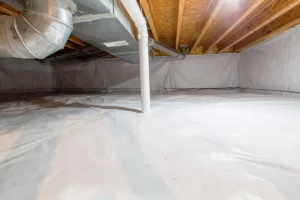
Debris, damaged insulation, and unsuitable existing liners are removed as necessary.
3. Water-management corrections
Drainage, sump pump protection, leak repairs, or exterior runoff improvements are completed when required.
4. Vent and air sealing
Foundation vents and penetrations are sealed to reduce uncontrolled exterior air entering the space.
5. Vapor barrier installation
The liner is fitted across the floor and around piers, columns, and other obstacles. Seams and penetrations are sealed, and the material is attached according to the system design.
6. Insulation and dehumidification
Foundation insulation, rim-joist air sealing, or a crawlspace-rated dehumidifier may be added based on the inspection findings.
7. Final testing and homeowner review
The installer checks the completed system, reviews equipment operation, and explains ongoing maintenance requirements.
How Long Does Crawlspace Encapsulation Last?
A professionally installed reinforced liner may remain functional for 20 years or longer when it is properly attached, protected from damage, and periodically inspected.
Its lifespan depends on:
- Liner material and thickness
- Installation quality
- Groundwater conditions
- Pest activity
- Crawlspace traffic
- Maintenance
- Plumbing leaks
- Performance of drainage and dehumidification equipment
Dehumidifiers, sump pumps, filters, and backup systems have separate maintenance schedules and may require service or replacement before the liner itself.
Crawlspace Encapsulation in Maryland and Northern Virginia
Moisture conditions differ from home to home, even within the same community. Properties near low-lying areas, clay-rich soils, slopes, older drainage infrastructure, or high groundwater may require more extensive water management than homes with limited seasonal humidity.
Armored Basement Waterproofing serves homeowners throughout Maryland, Washington, D.C., and Northern Virginia, including communities across Baltimore County, Harford County, Montgomery County, Frederick County, Washington County, Anne Arundel County, and surrounding areas.
Homeowners can review the company’s complete crawlspace service area to confirm whether their community is included.
Frequently Asked Questions
How much does crawlspace encapsulation cost in Maryland?
A standard Maryland crawlspace encapsulation project may cost approximately $5,500 to $9,500. Systems that include extensive drainage, a sump pump, dehumidification, insulation, or moisture remediation may cost $9,500 to $16,000 or more. An on-site inspection is necessary for accurate pricing.
Is crawlspace encapsulation worth the cost?
Encapsulation may be worthwhile when a crawlspace has persistent humidity, exposed soil, condensation, musty odors, damaged insulation, mold growth, pests, or moisture-related wood deterioration. Its value often comes from preventing damage and improving moisture control rather than from energy savings alone.
What is the difference between encapsulation and a vapor barrier?
A basic vapor barrier normally covers only the soil. Full encapsulation seals the crawlspace floor, walls, seams, vents, piers, and penetrations as part of a more complete moisture-control system. Drainage and dehumidification may also be included when needed.
Should crawlspace vents be sealed after encapsulation?
In a properly designed encapsulation system, foundation vents are generally sealed to prevent humid exterior air and winter drafts from entering. The crawlspace must then have an appropriate strategy for humidity control, insulation, and air management.
Does every encapsulated crawlspace need a dehumidifier?
Not always. The need for a dehumidifier depends on local humidity, groundwater conditions, drainage, air leakage, HVAC configuration, and the moisture level after the space is sealed. Humidity should be monitored rather than assuming that the liner alone will control every moisture source.
Do I need a sump pump before encapsulating?
A sump pump may be necessary when groundwater or recurring water intrusion collects beneath the home. Encapsulation should not be used to cover active standing water. The drainage problem should be corrected as part of the system design.
How long does installation take?
Many residential projects can be completed within several days, but the schedule depends on crawlspace size, accessibility, cleanup, drainage work, mold remediation, structural repairs, and equipment installation.
Can I encapsulate my crawlspace myself?
A basic DIY liner may reduce some exposed-soil moisture, but full encapsulation requires careful sealing and an understanding of drainage, humidity, insulation, electrical safety, and possible mold or structural damage. An incomplete system may trap or conceal moisture instead of solving the cause.
Protect Your Maryland Home from Crawlspace Moisture
Crawlspace encapsulation can be a worthwhile investment when it addresses the actual source of moisture beneath the home. The right system may include more than a plastic liner—it may require drainage, air sealing, vent covers, insulation, a sump pump, or dehumidification.
That is why the first step should be a complete inspection rather than choosing a standard package based only on square footage.
Armored Basement Waterproofing provides crawlspace inspections and customized moisture-control recommendations for homeowners throughout Maryland, Washington, D.C., and Northern Virginia. The company’s zero-salesman approach focuses on identifying the cause of the problem and recommending a system suited to the property.
Call (443) 949-3180 or schedule a free, no-pressure inspection to receive a written proposal for your crawlspace.