The Battle for Your Foundation: Why Exterior Water Management Matters
When most homeowners think about basement waterproofing, they picture interior solutions: sump pumps humming in the corner, subterranean French drains, or thick vapor barriers lining the walls. While those internal defenses are crucial, they represent the final line of defense. The most efficient strategy for basement flooding prevention is an offensive one: managing water out in the yard before it ever reaches your foundation footprint.
Every year, residential properties handle hundreds of thousands of gallons of stormwater runoff. If your home relies entirely on sub-floor drainage to deal with that volume, your systems are working overtime against relentless hydrostatic pressure. Embracing proactive exterior water management drastically reduces the burden on your internal infrastructure, keeping your below-grade living spaces completely dry and preserving your home’s structural value.
What is proper yard grading? (The 6-Inch Rule)
Your yard’s topography acts as a natural steering wheel for rainwater. Implementing correct yard grading for drainage ensures that gravity works for your home, not against it.
Positive vs. Negative Grading Explained
Ideally, your property should feature “positive grading”—meaning the soil slopes steadily downward as it moves away from the foundation perimeter. “Negative grading” occurs when the ground slopes toward your house, creating a massive funnel that directs every drop of regional rain straight into your foundation walls. When water collects along your basement masonry, it saturates the dirt, swells expansive clay soils, and builds intense lateral pressure that forces its way through tiny concrete pores and cove joints.
How Saturated Soil Settles Over Time
Many homeowners assume their grading is fine because their house was built correctly decades ago. However, soil naturally shifts and compresses. During the original home construction, the dirt backfilled around the foundation walls is less compact than the undisturbed virgin earth further out in the yard. Over a span of 10 to 20 years, this backfilled soil slowly sinks and consolidates, forming an unnoticeable dip right next to your home. This subtle trough traps pooled water, creating a quiet disaster zone for your basement floor plan.
The Danger of Dumping Rooftop Runoff Next to Your Walls
Your roof is an incredible water collector. A standard 2,000-square-foot roof sheds roughly 1,250 gallons of water during a single inch of rainfall. Where that water goes determines whether your basement stays dry or ends up flooded.
Why Standard Gutters Aren’t Enough
Even if your gutters are completely clear of leaves, standard downspouts usually terminate with a short plastic or aluminum splash block that dumps water just two or three feet from your foundation. This means you are essentially taking thousands of gallons of water from your roof and pooling it directly on top of the loose backfill zone next to your basement. It is an immediate recipe for internal seepage.
The Solution: Underground Buried Downspout Extensions
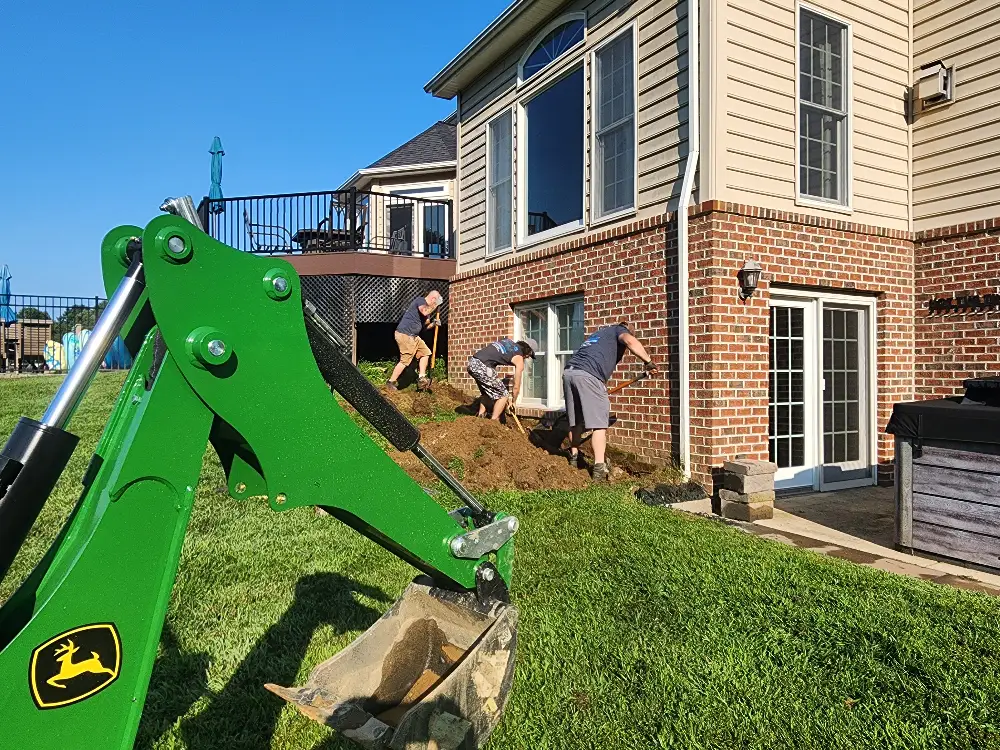
To fix this pipeline issue, professional contractors utilize heavy-duty buried downspout extensions. By connecting your vertical downspouts directly to solid, smooth-bore PVC pipes buried beneath the lawn, you can safely route roof water completely past the foundation zone. This allows you to learn how to divert water from foundation walls effectively, discharging it 10 to 15 feet away into a dedicated pop-up emitter, rain garden, or municipal storm path where it cannot harm your lower living spaces.
3 Clear Signs Your Yard Drainage System is Failing
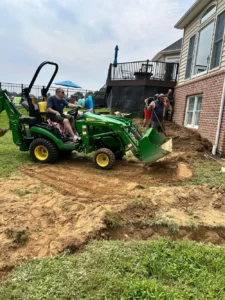
You don’t need to wait for active basement flooding to realize your property needs updated landscape drainage solutions. Keep an eye out for these three environmental red flags:
- Soggy or Spongy Turf: Lawn areas near the house that remain muddy, waterlogged, or spongy days after a heavy rainstorm indicate that water is pooling instead of draining away.
- Soil Erosion Channels: Visible dirt paths, displaced mulch, or exposed plant roots directly beneath your gutter downspouts prove that stormwater is moving erratically and washing away protective soil grading.
- Efflorescence on Basement Walls: If you notice a white, powdery, crystalline substance forming on your interior basement concrete block walls, that is efflorescence. It means water is actively soaking through the exterior dirt, dissolving minerals in the masonry, and evaporating into your home.
Cost vs. Benefit: Fixing Your Yard Before Your Basement Floods
Proactive exterior corrections are incredibly cost-effective when compared to emergency flood remediation. Repairing ruined drywall, replacing moldy basement carpeting, and restoring damaged personal belongings can easily scale into thousands of dollars of unexpected debt. Investing in clean landscape grading and underground downspout lines mitigates hydrostatic pressure at its source, protecting your interior spaces and guaranteeing long-term home equity protection.
Frequently Asked Questions
How far away should downspouts extend from a house foundation?
Downspouts should extend at least 4 to 6 feet away from the foundation. For homes with dense clay soil or poor drainage, buried downspout extensions should discharge water 10 to 15 feet away to better protect the basement.
What is the ideal slope for proper yard grading?
Proper yard grading should create a 5% slope away from the home. That means the ground should drop about 6 inches within the first 10 feet from the foundation to help move water away naturally.
Are buried downspout extensions better than splash blocks?
Yes. Buried downspout extensions are usually more effective because they carry roof runoff farther away from the foundation. Splash blocks often release water too close to the home, which can increase basement flooding risk.
Can I use corrugated flexible pipe for buried downspouts?
Corrugated flexible pipe can work temporarily, but it clogs more easily because debris catches in the ridges. Smooth-wall PVC pipe is better for long-term drainage because it improves water flow and is easier to clean.
Why does yard grading help prevent basement flooding?
Yard grading helps prevent basement flooding by directing rainwater away from the foundation. When soil slopes toward the home, water collects near basement walls and increases pressure that can force moisture inside.
Protect Your Home Without the Sales Pitch Gimmicks
Correcting complex exterior drainage issues requires structural precision and honest evaluations. At Armored Basement Waterproofing, we operate under a strict, non-negotiable ZERO Salesman Policy. We do not send commissioned sales reps to your property to push unnecessary high-priced installations. Instead, our veteran-led team sends experienced, non-commissioned structural inspectors who provide straightforward diagnoses backed by over 100 years of combined field experience and our transferable Life-of-Structure warranty. Reach out today to schedule your objective inspection.