For many homeowners in Northern Virginia, the crawlspace is an “out of sight, out of mind” area. However, if you’ve noticed a persistent musty odor in your living room, rising energy bills, or worsening allergy symptoms, the source is likely right beneath your feet. In the humid climate of NoVa—stretching from the historic homes of Alexandria to the newer builds in Sterling—managing crawlspace moisture is a structural necessity.
When looking for solutions, you will likely encounter two main options: a standard vapor barrier or full crawlspace encapsulation. While they may sound similar, they offer vastly different levels of protection. Understanding these differences is key to making a strategic investment in your home’s longevity and your family’s health.
The Hidden Impact of Your Crawlspace on Your Family’s Health
To understand why crawlspace care matters, you must understand the “Stack Effect.” In any home, hot air rises and escapes through the upper levels. As it rises, it creates a vacuum that pulls air upward from the lowest point of the house—the crawlspace. Research indicates that up to 50% of the air you breathe on the first floor of your home originated in your crawlspace.
If that space is damp, dark, and filled with mold spores or soil gases, that is exactly what you are breathing. This is why a “musty” smell is often more than just a nuisance; it is a sign of poor indoor air quality that can trigger respiratory issues and asthma.
What is a Standard Vapor Barrier?
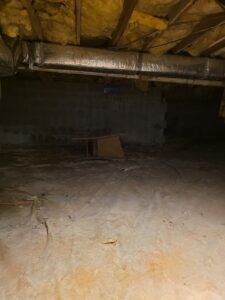
A standard vapor barrier is typically a thin plastic sheet (usually 6-mil poly) laid across the dirt floor of a crawlspace. Its primary goal is to slow down the rate of moisture evaporating from the soil into the air space.
Pros, Cons, and Limitations in High-Humidity Climates
While a vapor barrier is better than bare earth, it has significant limitations in the Mid-Atlantic region. It does not seal the walls, and it does not address the humid air entering through crawlspace vents. In many Northern Virginia homes, a simple vapor barrier acts as a “band-aid.” It might keep the dirt dry, but the wood floor joists above remain exposed to humid air, which leads to wood rot and fungal growth over time.
What is Full Crawlspace Encapsulation?
Full encapsulation is a comprehensive environmental management system. Instead of just covering the floor, we turn the crawlspace into a conditioned, “clean room” environment that is part of the home’s thermal envelope.
The Components: Reinforced Liners, Sealing, and Dehumidification
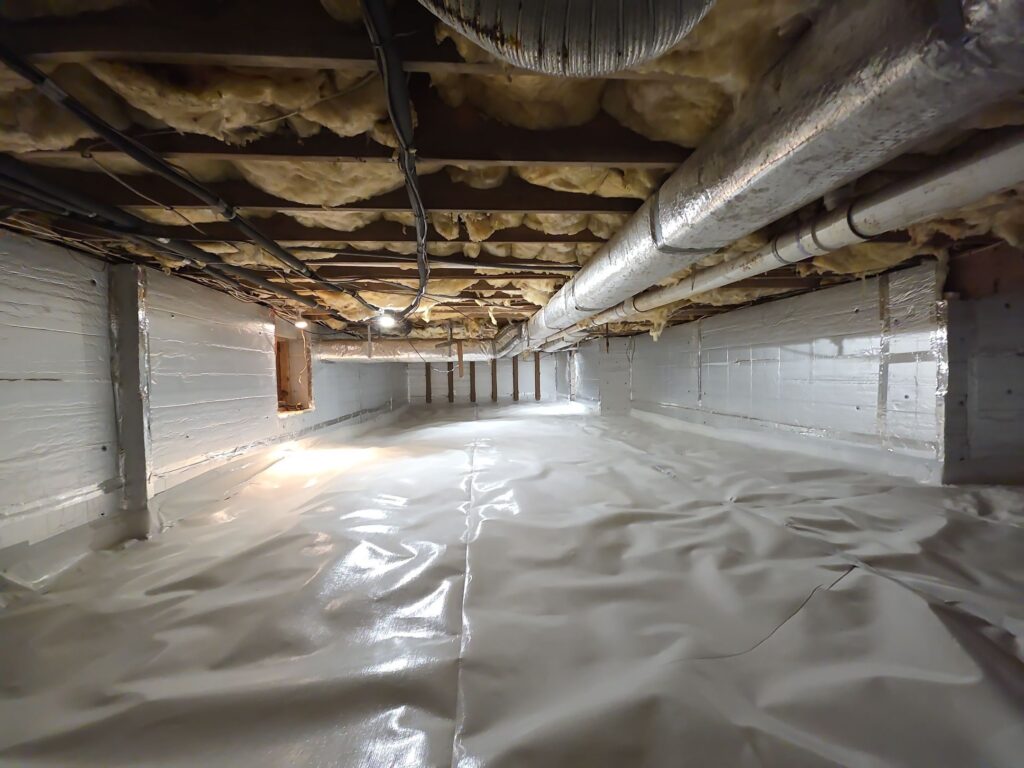
At Armored Basement Waterproofing, our encapsulation process involves several high-spec layers. We use heavy-duty, reinforced white liners that are mechanically fastened to the walls and sealed at the seams. We seal all foundation vents to keep the humid NoVa air out and install a dedicated, commercial-grade dehumidifier to maintain a constant, safe humidity level (typically below 55%).
Key Differences: Cost, Performance, and Longevity
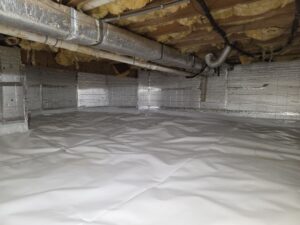
The choice between these two often comes down to the homeowner’s long-term goals. A vapor barrier is a lower initial investment, but it requires frequent maintenance and does little to improve energy efficiency. Encapsulation is a higher upfront cost but offers a permanent solution.
In the Northern Virginia market, encapsulation is increasingly seen as a value-add for real estate. It protects the home’s structural “bones”—the floor joists and subflooring—from the Mid-Atlantic’s notorious humidity and prevents the pests that thrive in damp environments, such as termites and carpenter ants.
3 Reasons to Choose Encapsulation for Your Northern Virginia Property
- Significant Energy Savings: By sealing the crawlspace, your HVAC system no longer has to fight the extreme cold of winter or the heavy humidity of summer seeping through your floors. Many homeowners see a 15-20% reduction in heating and cooling costs.
- Structural Preservation: Moisture leads to wood rot. Encapsulation keeps your joists dry and strong, preventing “saggy” floors and expensive structural repairs.
- Enhanced Indoor Air Quality: By eliminating the source of mold and musty odors, you ensure that the air being pulled into your living space via the stack effect is clean and dry.
FAQs About Crawlspace Care
Q: Will encapsulation help lower my energy bills?
A: Absolutely. By turning your crawlspace into a conditioned space, you eliminate the “drafty floor” effect and reduce the load on your air conditioner during those humid Virginia summers.
Q: How long does crawlspace encapsulation last?
A: When we use heavy-duty, reinforced liners and professional sealing techniques, an encapsulation system is designed to last 20 years or more. It is a one-time investment in the health of your home.
Q: Why does my crawlspace smell like “cat pee” or old gym socks?
A: These odors are often the result of “off-gassing” from damp soil or the metabolic byproducts of mold growing on your floor joists. Encapsulation seals off the soil and dries out the wood, eliminating these odors at their source.
Get an Honest Assessment for Your NoVa Home
At Armored Basement Waterproofing, we know that every home is unique. We don’t send commission-based salespeople to your door; we send experienced inspectors who provide honest recommendations. We will tell you if a simple barrier is sufficient or if full encapsulation is the right choice for your specific property.
Contact us today for a zero-pressure inspection in Arlington, Alexandria, Sterling, or anywhere in Northern Virginia.