Ever walked into a room and been hit by a damp, musty odor? Or noticed peeling paint that wasn’t there before? These signs could mean that your sealants aren’t doing their job. When sealants fail to prevent moisture intrusion, it can lead to structural water issues that damage your home and compromise its integrity. It’s not just about aesthetic appeal, but also about the safety and health of your living environment. So, what’s a homeowner to do? Recognizing these signs early can help you tackle the problem head-on, but there’s more to it than that. Are you ready to explore further?
Key Takeaways
- Sealant failure, due to poor application or low-quality products, can lead to structural water issues.
- Signs of water problems include damp odors, visible mold, peeling paint, stains on walls, and warped wood.
- Investigate potential causes like a leaking roof, damaged plumbing, or poor drainage to identify sealant shortcomings.
- Regular maintenance such as cleaning gutters, inspecting roofs, and proper grading can prevent water intrusion.
- If sealants still fail, professional solutions like waterproofing services and structural evaluations can effectively address water issues.
Understanding the Role of Sealants
Almost every homeowner will encounter sealants at some point. You’ll find them in various parts of your house, from your kitchen’s tiled backsplash to your bathroom’s shower stall.
They’re an essential tool in maintaining the integrity and longevity of your home, but what exactly are they?
Sealants, in their basic form, are substances used to block the passage of fluids through the surface or joints or openings in materials. That’s a fancy way of saying they keep water where it’s supposed to be.
They play a vital role in preventing moisture from seeping into areas it shouldn’t, therefore warding off potential water damage.
In your home, you’ll typically encounter two types of sealants: silicone and polyurethane.
Silicone sealants are widely used due to their flexibility and high resistance to weathering. Polyurethane sealants, on the other hand, offer excellent adhesion to a wide variety of materials.
Understanding how these sealants work can help you keep your home in top shape.
Common Reasons for Sealant Failure
Despite their critical role, sealants aren’t foolproof and their failure can lead to serious structural water issues in your home. They’re designed to shield your home from moisture, but various factors can undermine their effectiveness.
One common reason is poor application. Sealants need to be applied uniformly and at the right thickness. If you’re sloppy or rush the job, you’re setting yourself up for failure.
It’s also vital that the area being sealed is clean and dry. Debris or moisture can prevent the sealant from adhering correctly.
Another problem is the use of low-quality sealants. You might think you’re saving money, but it’s a false economy. Inferior sealants don’t have the durability or performance of their higher-quality counterparts.
Over time, they can crack or peel, allowing water to penetrate.
Finally, don’t overlook the impact of environmental conditions. Extreme temperatures, UV exposure, and harsh weather can degrade sealants over time.
Regular maintenance and periodic replacement are necessary to make sure your sealant continues to protect your home effectively.
Signs of Structural Water Issues
Understanding the signs of structural water issues early can save your home from serious damage.
Imagine waking up one morning and stepping onto a soggy carpet. Your heart sinks as you realize there’s a water problem lurking somewhere.
You don’t have to be a professional to spot trouble. Keep an eye out for these telltale signs:
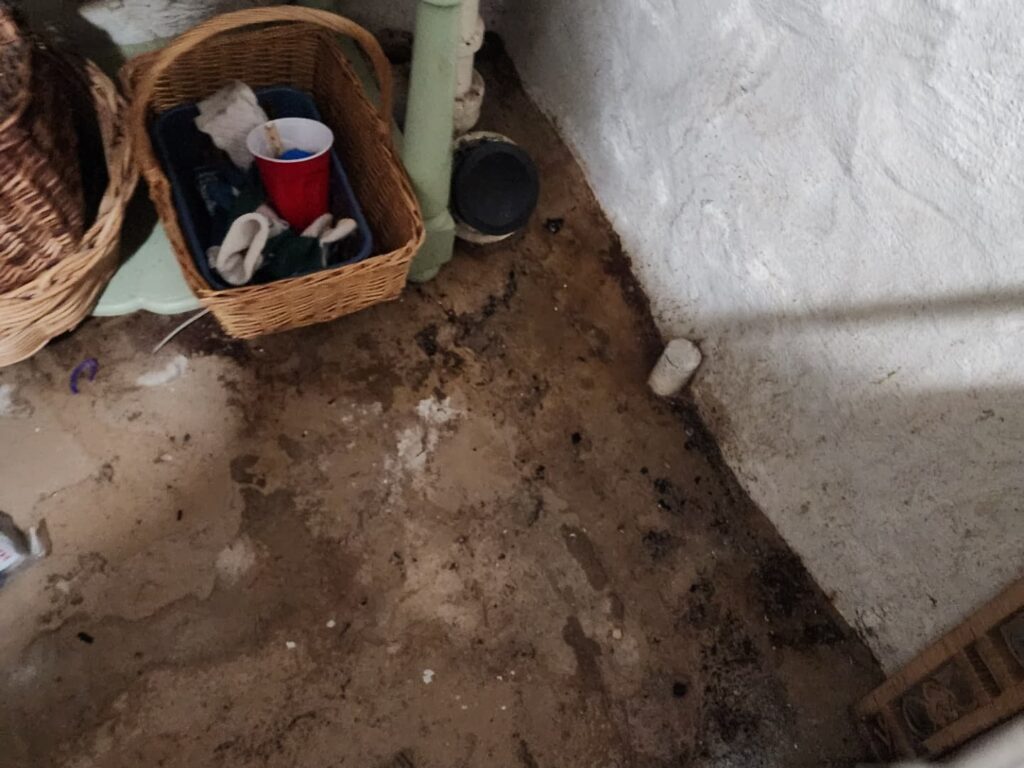
- Damp, musty smell: This is often the first clue. If your home starts smelling like a damp basement, there’s likely a water issue somewhere.
- Visible mold or mildew: These can appear as black spots on walls, ceilings, or around windows. They’re not just unsightly but also hazardous to your health.
- Peeling paint or wallpaper: Water seeping into wall spaces can cause these materials to peel or blister.
- Stains on ceilings or walls: These can be yellow, brown, or copper-colored and often appear in a circular shape.
- Warped floors or doors: Excess moisture can cause wood to warp, leading to uneven floors or doors that won’t close properly.
Don’t ignore these signs. It’s time to act before minor issues turn into major disasters.
Investigating Water Damage Causes
Plunge into the investigation of water damage causes in your home. It’s not as intimidating as it seems. You’ll need to look for signs of water ingress, which is water that has found its way inside your home.
| Cause | Signs | Action | |
|---|---|---|---|
| 1 | Leaking Roof | Stains on ceiling/walls, damp attic insulation | Inspect roof for damage |
| 2 | Damaged Plumbing | Unexplained water usage, damp floors/walls | Check plumbing system |
| 3 | Poor Drainage | Pooling water, soil erosion near foundation | Analyze drainage system |
A leaking roof might be the culprit if you notice stains on your ceiling or walls, or damp attic insulation. Check your roof for damage. Damaged plumbing can lead to unexplained water usage and damp floors or walls. Be certain to check your plumbing system for any issues. Poor drainage can cause pooling water and soil erosion near your home’s foundation. You should analyze your drainage system to guarantee it’s functioning properly.
Prevention and Maintenance Tips
Having uncovered possible causes of water damage in your home, it’s equally important to know how to prevent these problems from occurring in the first place.
Regular maintenance and proactive measures can save you significant time, money, and stress.
Consider the following tips to safeguard your home:
- Regularly check and clean your gutters. Clogged gutters can cause water to spill onto your home’s foundation, which may lead to problems.
- Inspect your roof for missing or damaged shingles. A compromised roof can allow water to seep into your home.
- Install a sump pump in your basement if you don’t already have one. This can help prevent basement flooding.
- Make sure your home’s grading directs water away from your foundation. If it doesn’t, consider regrading your yard.
- Insulate exposed pipes to prevent them from freezing and bursting.
Professional Solutions for Water Issues
When water issues escalate beyond simple DIY fixes, it’s time to call in the professionals. You might be dealing with a more complex problem that requires a detailed analysis and a specialized solution.
Professional waterproofing services offer a range of solutions that can address and correct your water issues. They’ve the expertise to diagnose the root cause of the problem, whether it’s poor drainage, soil instability, or foundation cracks.
More importantly, they can provide effective, long-lasting solutions that you wouldn’t be able to achieve on your own.
Consider hiring an engineer or a structural specialist. They’ll evaluate your property, identify the issues, and design a custom solution. This could include installing drainage systems, applying waterproof membranes, or reinforcing your foundation.
So, when sealants fail, it’s your responsibility to recognize and address structural water issues promptly. Look out for telltale signs like musty odors, visible mold, or warped wooden structures. Investigate potential causes, and don’t hesitate to call in professionals if needed. Remember, prevention is better than cure, so keep up with regular maintenance. Your home’s integrity and your family’s health are too important to risk.