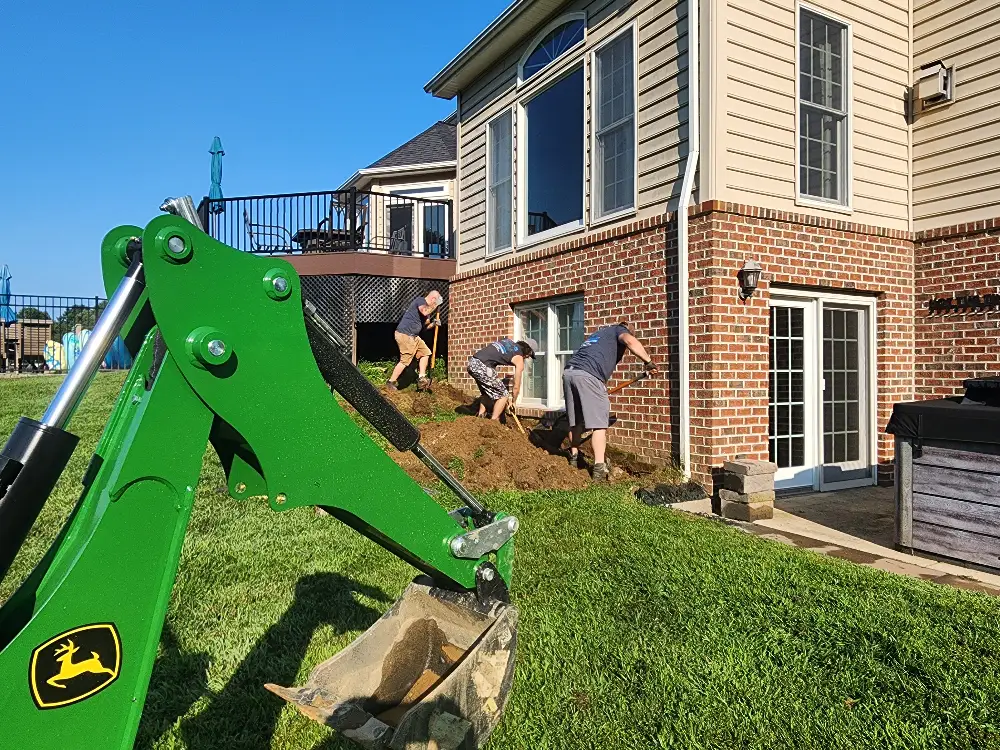
Have you ever considered how landscape grading could be the unsung hero in the fight against basement flooding? It’s not just about making your yard look aesthetically pleasing, but also about strategically directing water away from your home’s foundation. With just a 2% slope away from your home, you can guarantee rainwater takes a detour towards your street or drainage system, instead of pooling around your property. Not only does this method protect your basement’s structural integrity, but it also reduces soil erosion. Let’s explore this simple yet powerful technique that can save you from costly water damage.
Key Takeaways
- Landscape grading directs runoff away from your home, preventing water from pooling near the foundation and causing basement flooding.
- An ideal landscape grade has a minimum 2% incline (2.4 inches drop per 10 feet) to effectively guide water away from the house.
- Regular checks on the grading are vital to maintain its effectiveness in preventing basement floods, by correcting improper slopes and compacted soil.
- It’s crucial to maintain at least six inches of distance between soil and foundation to avoid water intrusion into the basement.
- Proper landscape grading enhances soil stability, reduces erosion, and minimizes the risk of basement flooding, contributing to overall property value.
Understanding Landscape Grading
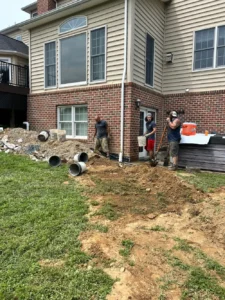
Often, homeowners overlook the importance of landscape grading. It’s not just about aesthetics; it’s a strategic task that can safeguard your property. You might be wondering, what exactly is landscape grading? Simply put, it’s the process of leveling or sloping the ground to manage water runoff.
Imagine your yard as a battlefield where you’re fighting against water damage. The slopes and contours are your best soldiers, directing water away from your home. Whether you’re dealing with a flat yard or a hilly one, understanding the grading is essential.
Think of your home as the castle that needs defending. If the ground around it slopes towards it, it’s like opening the gates to an enemy. Water will pool around your home’s foundation, causing potential damage over time.
On the other hand, if the ground slopes away from your home, it works like a moat, directing water away and keeping your foundation dry.
The Link Between Grading and Flooding
Having a well-graded landscape is akin to having a well-planned defense strategy against water damage. It’s your first line of protection, helping to direct the flow of rainwater and melted snow away from your home. The right grading can prevent water from pooling around your foundation, which, if left unchecked, can result in a flooded basement.
You might be wondering how this works. Well, the concept is pretty straightforward. If your landscape slopes towards your house, water will naturally follow that path, leading straight to your basement. On the other hand, if your yard slopes away from your home, that water is guided elsewhere, reducing the risk of flooding.
Now, you shouldn’t think of this as a surefire solution. No matter how perfect your grading, extreme weather conditions can still pose a risk. But, proper grading considerably lowers that risk, making it an essential part of your home’s flood defense.
Basics of Proper Landscaping Grading
Without the right knowledge, landscaping grading can seem like a formidable task. But don’t worry, it’s simpler than you might think. Fundamentally, landscaping grading is all about shaping the surface of your land to control water flow. It’s the process of leveling or sloping the ground to guarantee water drains away from your home, not towards it.
Let’s start with the basics. You’ve got to understand the lay of your land first. Look at where the high and low points are. This will help you determine the natural flow of water. Ideally, your yard should slope away from your home, guiding water to the streets or sewer systems.
Next, it’s about creating the right grade. A good rule of thumb is to have at least a 2% incline for every 10 feet away from the foundation of your home. That means for every 10 feet, the ground should drop about 2.4 inches.
This slope guarantees that water flows away rather than pooling around your home.
Essential Tools for Grading
You’ll need the right tools for successful landscaping grading.
Let’s talk about how to select the best equipment, understand their functions, and keep them well-maintained.
Grading Equipment Selection
While grading your landscape might seem like an intimidating task, choosing the right equipment can greatly simplify the process.
You’ve probably come across a plethora of choices when it comes to grading tools, but not all of them may be necessary for your specific project.
First things first, you’ll need a good quality shovel. It’s the most basic but essential tool for any grading project. Look for one that’s sturdy, ergonomic, and preferably with a long handle for better reach and leverage. A flat shovel is generally best for moving and spreading soil.
Next, consider renting a skid steer loader if you have a large area to grade. It’s powerful, versatile, and can save you a ton of time and effort.
Understanding Grading Tools
Having the right grading tools at your disposal can turn a challenging task into a manageable project.
You’ll require a variety of tools, each with its unique role in the grading process. Here’s a rundown on a few of them.
First off, you’ve got the long-handle round point shovel. It’s great for digging and moving soil around, a basic necessity in any grading task.
Then there’s the bow rake, perfect for smoothing out the area after you’ve shifted the soil. It’s even got a flat side that you can use for leveling.
Your next best friend is the wheelbarrow. It’s essential for transporting soil from one point to another. Sure, it’s a simple tool, but it’s a game-changer in heavy-duty landscaping tasks.
Proper Tool Maintenance
Keeping your landscaping tools in excellent condition greatly extends their lifespan and guarantees you get the job done right. Proper tool maintenance plays an essential role in effective and efficient landscaping grading.
It’s not just about having the right tools; it’s also about ensuring they’re always ready for the job. Your tools will serve you well if you take care of them.
Here’s a simple routine to help keep your grading tools in top shape:
- Clean your tools after each use. Rinse off soil and debris, then dry them thoroughly to prevent rusting.
- Inspect your tools regularly. Look for signs of wear and damage. Replace or repair parts as necessary.
- Sharpen your tools. A sharp edge makes the work easier and causes less damage to plants.
- Store your tools properly. Keep them in a dry and secure place, away from harsh weather conditions.
Step-by-step Guide to Landscape Grading
Now, let’s move onto the next section: a step-by-step guide to landscape grading.
Here, you’ll get to grips with the basics of understanding landscape grading and learn how to implement proper grading techniques effectively.
This practical guide will arm you with the knowledge you need to prevent basement flooding and enhance your property’s appearance.
Understanding Landscape Grading
While you mightn’t realize it, landscape grading plays an essential role in protecting your home from water damage. It’s a landscaping technique that adjusts the slope of your land to direct water away from your home’s foundation.
Without proper grading, water can pool around your home, leading to basement flooding and costly repairs.
To understand landscape grading, consider these four key components:
- Slope: This is the angle of your land. A positive slope moves water away from your home, while a negative slope can direct water towards it.
- Swales: These are shallow, wide ditches designed to redirect water. They’re often used in landscape grading to guide water away from the house.
- Berms: These raised areas can act as barriers to prevent water flow towards your home.
- Drainage systems: Sometimes, additional measures like installing French drains are needed to guarantee proper water flow.
Implementing Proper Grading Techniques
To safeguard your home from possible water damage, you’ll need to implement proper landscape grading techniques. This process isn’t as intimidating as it sounds, and with careful planning and execution, you can greatly reduce your risk of basement flooding.
Start by determining the slope of your yard. You’ll need a 2% incline, which means for every 10 feet, you’ll need a 2-inch drop. This guides water away from your home’s foundation. Use a line level or laser level to accurately measure this.
Next, you’ll need to choose a grading material. Topsoil is most commonly used, but crushed stone and sand can also work. Spread your chosen material with a rake to create the desired slope. Remember, consistency is key here.
Finally, plant grass or other ground cover to prevent erosion. This also helps to absorb excess water. You can also consider installing a French drain for added protection.
But don’t be complacent. Regularly check your grading for erosion and make adjustments as needed.
With these steps, you’ll not only protect your basement from unwanted water, but also enhance your home’s overall curb appeal.
Common Grading Mistakes to Avoid
Many homeowners make vital grading mistakes that can lead to basement flooding. You may be one of them without even realizing it.
It’s easy to overlook the importance of proper slope and drainage, but they’re essential to keeping your home dry and safe.
Common mistakes include:
- Improper Slope: Ideally, your yard should slope away from your home to prevent water from running towards your foundation. If it’s flat or sloping towards your home, you’ve got a problem.
- Ignoring Drainage Swales: These are shallow, wide ditches designed to redirect water away from your home. If you fill them in or level them out, you’re inviting water right to your door.
- Compacting the Soil: If you’re driving heavy equipment over your yard or if you’re walking on it excessively, you can compact the soil. Compacted soil won’t absorb water as efficiently, causing runoff towards your home.
- Piling Soil Against the Foundation: Any soil piled against your home can direct water towards your foundation. It’s best to keep soil at least six inches away from siding.
Avoid these mistakes and you’ll be well on your way to a flood-free basement.
Impact of Grading on Plant Health
Grading, the art of sculpting your landscape, doesn’t just prevent basement flooding—it greatly influences the health of your plants. When done correctly, it guarantees appropriate water drainage, preventing waterlogged roots and fostering plant growth.
If you’ve ever dealt with a waterlogged plant, you’ll know it’s no picnic. Poor grading can cause water to pool around your plant’s base, leading to root rot and plant death.
On the flip side, inadequate grading can also lead to water runoff. Water rushing away from your plants means they can’t absorb the necessary moisture and nutrients. This could lead to drought stress, weakening your plants and making them susceptible to pests and disease.
But it’s not just about water. Proper grading also allows for adequate sunlight exposure. Depending on your plant types, too much or too little sunlight can drastically affect their health.
A well-graded landscape guarantees each plant receives the right amount of sun, promoting peak growth.
Professional vs. DIY Landscape Grading
Understanding the profound influence of grading on plant health naturally leads us to the question: Is it better to hire a professional or undertake this task yourself?
There’s no definitive answer as it depends on your skills, available time, and budget. Professionals bring experience, specialized tools, and a well-trained eye to guarantee the task is done correctly. They’re knowledgeable about soil types, drainage patterns, and local regulations, which could save you from costly mistakes.
However, hiring a professional can be expensive.
On the other hand, DIY landscape grading can be cost-effective if you’re handy and have the right tools. You’ll need to invest time learning about grading techniques and local regulations. The satisfaction of completing the task yourself can be rewarding.
Consider these points when making your decision:
- Do you have the necessary skills and time to devote to the project?
- Are you prepared for potential mistakes and their consequences?
- Do you have access to the required tools and equipment?
- Can you afford professional services, or would DIY be more cost-effective?
Maintenance Tips for Your Graded Landscape
A well-graded landscape can markedly enhance the beauty and value of your property, but it does require regular maintenance to keep it in top shape.
Don’t neglect it, as overgrown vegetation can alter the slope, leading to water pooling and potential basement flooding.
Firstly, regularly check for erosion, especially after heavy rains. If you spot any signs, you’ll need to fix it promptly to prevent your landscape’s grade from changing.
An easy fix is adding more soil and compacting it to match the surrounding grade.
Secondly, maintain your grass and plants. Overgrown roots can disrupt the grade. Regular mowing, trimming, and weeding are essential.
But remember, don’t overwater, as it can lead to soil erosion.
Lastly, make sure your drainage systems, such as gutters and downspouts, are clear and functioning properly.
They’re critical in directing water away from your home. If blocked, water can overflow, causing a change in your landscape’s grade.
Real-life Success Stories of Landscape Grading
Now, let’s look at how others have successfully used landscape grading to solve their flooding issues.
You’ll hear about transformative grading successes that turned potentially disastrous situations into thriving landscapes.
Through these case studies, you’ll see how grading solutions can be applied in practical, real-life situations.
Grading Solutions in Practice
Often, homeowners struggle with frequent basement flooding due to incorrect landscape grading.
You’re not alone if you’ve experienced this. Thankfully, there are proven grading solutions that have helped many homeowners save their basements from flooding.
Let’s explore some practical examples.
Mr. Johnson of Florida had persistent flooding issues. He hired a professional landscape contractor who re-graded his landscape. This simple alteration redirected runoff away from his house, and he’s been flood-free ever since.
In Ohio, Mrs. Smith was facing similar problems. She invested in a full yard re-grading. To her delight, not only did it solve the flooding issue, but it also enhanced the overall aesthetic of her yard.
Mrs. Brown in New York took a DIY approach. After studying her yard’s slope, she created a gentle swale to divert water away from her home. It worked!
Lastly, Mr. Thompson from Texas used terrace grading. This not only stopped the flooding but also gave his yard a whole new look.
So, you see, there are practical solutions to your flooding woes. They include:
- Professional landscape re-grading
- Full yard re-grading
- DIY swale creation
- Terrace grading
Don’t let basement flooding dampen your spirits. There’s a solution that’ll work for you.
Transformative Grading Successes
You might be surprised to learn how transformative correct landscape grading can be.
It’s not just about aesthetics; it’s about saving your basement from potential flooding disasters.
Take, for example, a homeowner in the Midwest. They’d a recurring issue with basement flooding every spring, and no amount of waterproofing seemed to solve the problem.
However, they decided to invest in professional landscape grading. The results? A dry basement, even during the heaviest spring rains. This was because the regrading directed water away from the home’s foundation, preventing it from seeping into the basement.
Or consider a couple in the Pacific Northwest. They dealt with soggy yards and a damp basement every winter.
After regrading their property to create a gentle slope away from the house, their yard drained effectively, and their basement remained dry all season.
These real-life successes show the power of proper landscape grading.
It’s not just about making your yard look good – it’s about protecting your home from damaging water.
Landscape Grading: Case Studies
Let’s explore specific case studies that highlight the effectiveness of landscape grading. You’ll see how this strategy has saved basements from water damage, even in challenging circumstances.
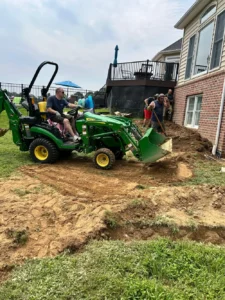
First, consider the case of a home in Minnesota, where heavy snowfall and spring melts caused recurrent basement flooding. The solution was an extensive regrading project, which successfully diverted water away from the foundation.
Another instance is a 19th-century farmhouse in Ohio. It suffered from significant water intrusion due to its location at the bottom of a hill. A professional landscaper regraded the landscape to gently slope away from the house, solving the problem.
Here are some more examples:
- A home in Florida, where frequent heavy rains led to pool creation against the house. Grading the landscape allowed for proper water runoff, ending the pooling issue.
- A property in California that faced soil erosion due to a steep slope. The landscaper regraded the area to a more manageable slope, preventing further erosion.
In each case, landscape grading was the key to saving the basement from flooding. This goes to show that no matter where you’re located or what kind of climate you have, landscape grading can be a game-changer.
So, you’ve got the scoop on landscape grading! Remember, it’s more than just curb appeal. Proper grading can save your basement from flooding, reducing the risk of costly water damage. It’s a pro-active step to guarantee soil stability and manage water runoff effectively. Whether you choose DIY or hire a pro, maintaining your graded landscape is key. Just imagine, no more sleepless nights during heavy rains. Now, that’s peace of mind worth investing in!